On Healing Land, Birds Perch: Rehumanizing an Icon of the War
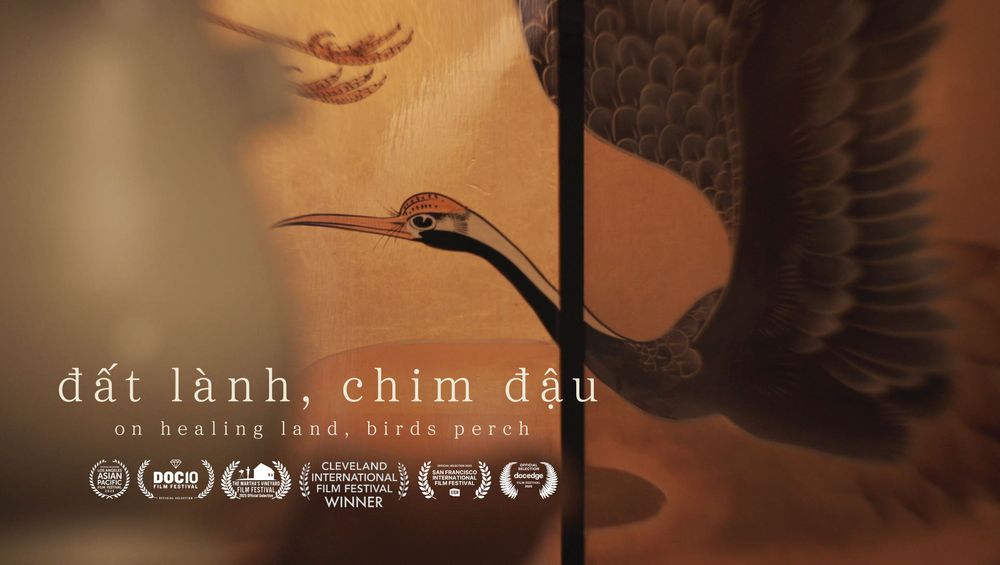
A film that asks what happens after history
Being officially shortlisted for the 98th Academy Awards in the category of Best Documentary Short Film, On Healing Land, Birds Perch (Đất Lành, Chim Đậu) is a powerful mid‑length documentary (≈33 minutes, 2025) by Vietnamese‑born filmmaker Naja Pham Lockwood. Rather than revisiting the Vietnam War through familiar battle lines or political abstractions, the film begins with a single, globally recognized photograph—and then asks a quieter, more unsettling question: what becomes of the people and families who are turned into symbols by history?
At its center is Eddie Adams’s Pulitzer Prize–winning photograph “Saigon Execution” (1968), an image that has circulated for decades as an emblem of the war’s brutality. Reproduced endlessly in textbooks, museums, and media, the photograph has often stood in for an entire conflict. Lockwood’s film gently but firmly resists this flattening. It turns away from the image’s symbolic weight and instead follows the long, human afterlife of that moment.
From icon to aftermath
Rather than re‑litigating the photograph as evidence or argument, On Healing Land, Birds Perch shifts the frame to those who inherited its consequences. Through rare and intimate interviews, the film brings together: The daughter of General Nguyễn Ngọc Loan, the South Vietnamese officer who fired the shot; The children of Nguyễn Văn Lém, the man who was executed; and The son of a family allegedly killed by Lém, a contested but crucial part of the photograph’s backstory. These individuals did not choose the roles history assigned to their parents, yet they live with the photograph’s interpretations, judgments, and silences. The film reveals how a single frozen second reverberates across decades—shaping family narratives, migration paths, public scrutiny, and private grief.
Intergenerational trauma and moral inheritance
One of the documentary’s most striking contributions is its focus on intergenerational trauma. Trauma here is not only psychological but social and symbolic: the burden of being publicly linked to an image that the world believes it already understands.
The film shows how children of both “sides” navigate moral inheritance without a clear resolution. There are no easy reconciliations, no definitive historical verdicts. Instead, Lockwood allows contradiction, uncertainty, and empathy to coexist. In doing so, the documentary resists the binary logic—victim versus perpetrator, good versus evil—that so often dominates representations of war.
Diaspora, refuge, and the meaning of “healing land”
The Vietnamese title, Đất lành, chim đậu, refers to a proverb meaning “on good, healing land, birds will perch.” It evokes refuge, resettlement, and the possibility of rebuilding life after upheaval. This idea resonates deeply with the film’s diasporic lens.
Many of the film’s participants, like the filmmaker herself, are shaped by displacement and resettlement—by becoming refugees, immigrants, and “new Americans.” Healing, the film suggests, is not the erasure of the past, nor a final reconciliation with history, but the fragile, ongoing work of living forward while carrying what cannot be undone.
A Vietnamese‑born perspective on a global image
That this film is directed by a Vietnamese‑born filmmaker is especially significant. “Saigon Execution” is among the most widely circulated images of the Vietnam War, yet its meanings have largely been constructed through Western media and institutional frames. Lockwood’s approach does not seek to replace one authoritative narrative with another. Instead, it recenters Vietnamese voices—particularly those whose lives were irrevocably shaped by the photograph, yet rarely heard in its retellings..
Why this film matters today
At a time when images of violence circulate globally within seconds—often detached from context or consequence—On Healing Land, Birds Perch offers a vital counter‑gesture. It reminds us that images do not end when the shutter closes. They travel, accumulate meanings, and leave long shadows across generations.
The film’s quiet, humane insistence on listening makes it not only a meditation on the Vietnam War, but also a timely reflection on displacement, memory, and the ethics of representation in the digital age.
The film will be available to view via Los Angeles Times Short Docs on Feb 2, 2026
👉 Watch On Healing Land, Birds Perch on LA Times Short Docs
https://www.latimes.com/shortdocs
(Availability may vary by region; readers are encouraged to check the listing directly.)