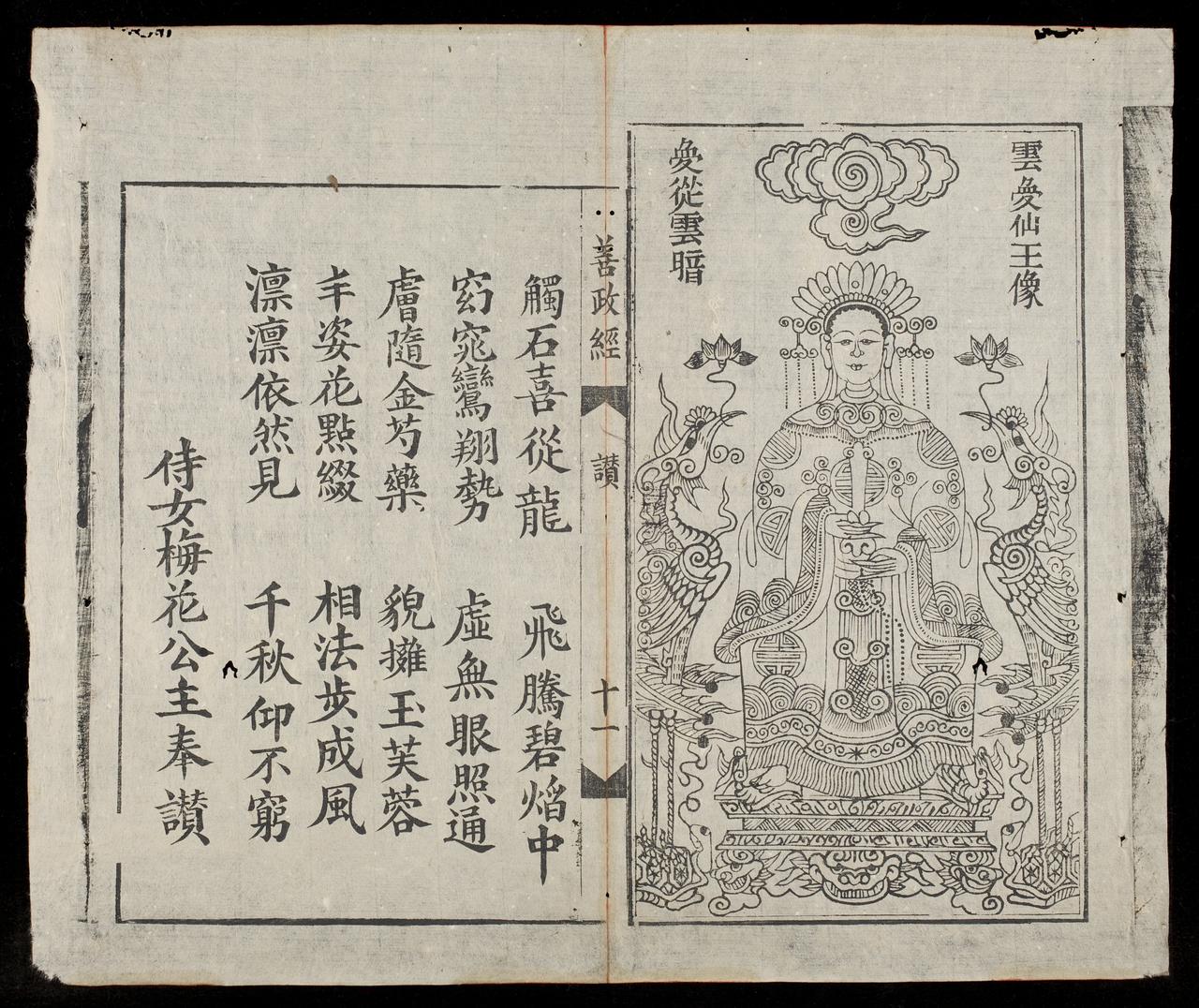
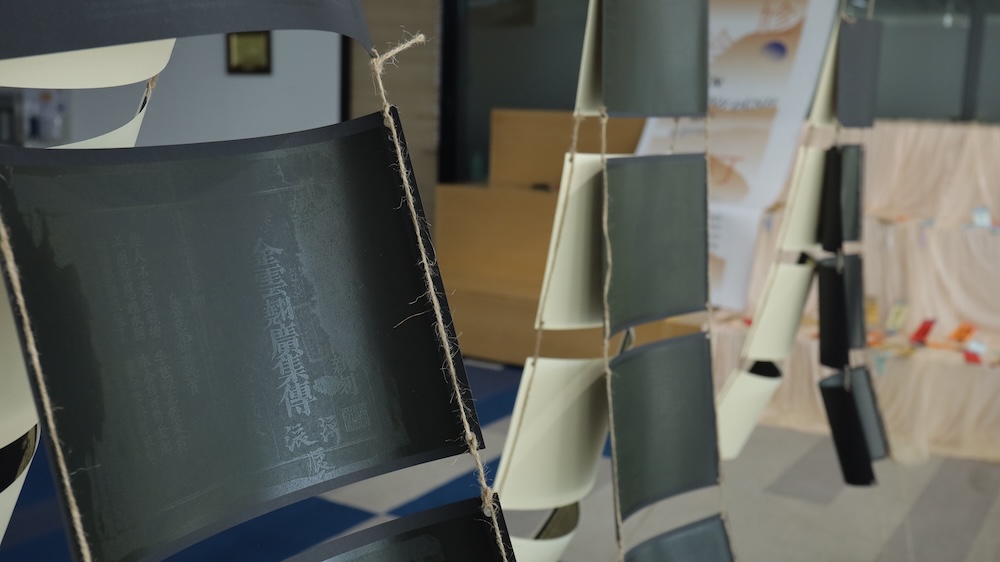
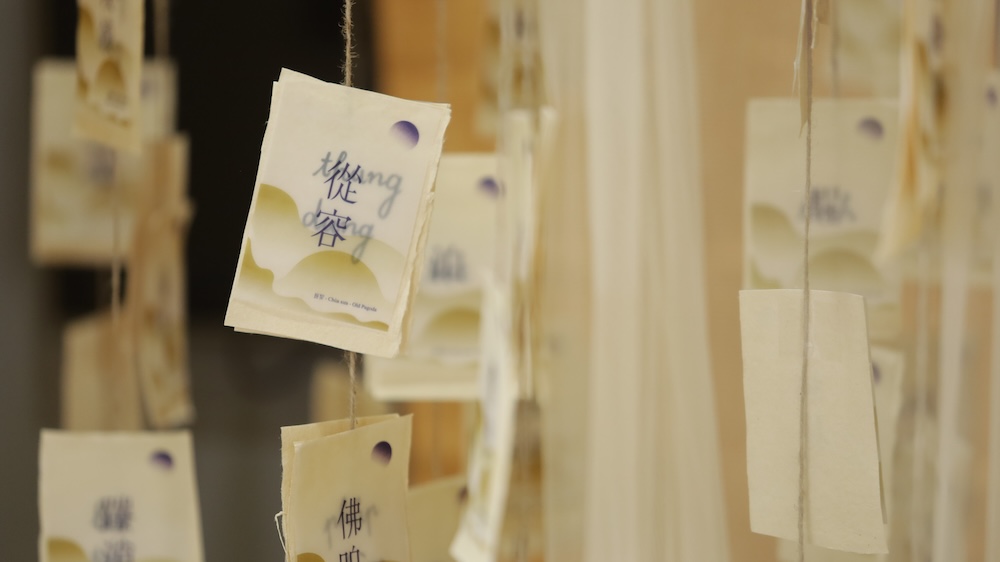
Digitizing Việt Nam marks a digital leap forward in Vietnam Studies through a Columbia - Fulbright collaboration, formalized through that began with a 2022 memorandum of understanding between the Weatherhead East Asian Institute and the Vietnam Studies Center. The Digitizing Việt Nam platform began with the generous donation of the complete archive by the Vietnamese Nôm Preservation Foundation to Columbia University in 2018.


Delve into Vietnam's history, culture, and society through cutting-edge tools and curated resources tailored for scholars, students, and educators.
Explore our digital archive dedicated to preserving and academically exploring Vietnam's historical, cultural & intellectual heritage.
Engage creatively with Vietnam Studies — Use Digitizing Vietnam's specialized tools to approach the field with fresh perspectives and critical insight.
Discover and teach Vietnam Studies with impact — Explore curated syllabi, lesson plans, and multimedia resources designed to support innovative and inclusive learning experiences.
Latest news and discoveries from the digital front of Vietnamese heritage.

The Vietnam Center & Sam Johnson Vietnam Archive and the Institute for Peace & Conflict (Texas Tech University), in collaboration with the University of Social Sciences and Humanities – Vietnam National University, Ha Noi, are pleased to announce an international conference on history, archives, and U.S.–Vietnam relations.
Conference Themes
The conference welcomes interdisciplinary perspectives on U.S.–Vietnam relations, including diplomatic, political, economic, social, cultural, and military dimensions — from early encounters in the late 18th century, through major wars and conflicts, to normalization and today’s Comprehensive Strategic Partnership. Particular attention is given to research engaging archival sources and archival methodologies.
Who Should Submit
Format & Publication
Proposal Deadline: March 1, 2026
250-word abstract + 2-page CV/resume
Submit to: usvietnamconference2026@gmail.com
Post-Conference Orientation Tour
A post-conference academic tour to Ha Noi, Ha Long Bay, Hue, Da Nang, and Ho Chi Minh City is planned (limited capacity, self-funded).
📩 For inquiries: usvietnamconference2026@gmail.com
👉 Learn more about the conference: https://tinyurl.com/us-vn-conference

About the Author
Sara Ann Swenson is an Assistant Professor in Religion at Dartmouth College, where she focuses on contemporary Buddhism in Vietnam. She holds a PhD and MPhil in Religion from Syracuse University, an MA in Comparative Religion from Iliff School of Theology, and a BA in English from the University of Minnesota Duluth. Swenson’s work bridges anthropology, religious studies, and social theory, offering a nuanced view of the role of Buddhism in modern Vietnam.
About the Book
In Near Light We Shine: Buddhist Charity in Urban Vietnam (Oxford University Press, 2025, part of the AAR Academy Series), Sara Ann Swenson presents one of the first major ethnographic studies on Vietnamese Buddhism, delving into how grassroots Buddhist charity movements have shaped the urban landscape of modern Vietnam. This pioneering book offers a new perspective on the intersection of religion, migration, urban development, and humanitarian efforts. Through detailed ethnographic research and interviews, Swenson brings to light the diverse and often marginalized voices involved in these charity movements, offering readers an unprecedented view of Buddhist charity in Vietnam.
As Vietnam's rapid urbanization strains public infrastructure, particularly in urban centers like Ho Chi Minh City, religious communities have stepped in to meet critical social service needs. Volunteers, often led by Buddhist practitioners, have adapted Buddhist teachings and practices to organize charity events that support the most vulnerable: low-income laborers, elderly women, migrant workers, and queer individuals. In Near Light We Shine, Swenson examines why people join these grassroots movements, exploring the philosophical and social dynamics that drive this kind of charity.
Swenson’s book draws from two years of ethnographic research in Ho Chi Minh City, offering deep insight into the intersection of Buddhism and charity and providing an analysis of the diverse motivations of volunteers and recipients alike. The book explores the tensions between different approaches to charity and altruism, revealing the philosophical and ontological disputes over what constitutes "true charity" in a rapidly changing society. Volunteers promote Buddhist cosmologies that are at times traditional, pro-socialist, skeptical, queer, and modern, shaping not just how they engage with charity, but how they view their role in transforming society.
By examining these movements through a Buddhist lens, Swenson explores how religion, charity, and social networks come together to create moral communities that address the complex issues brought on by urban migration and development in Vietnam. Near Light We Shine highlights how Buddhist charity is not just about giving but is deeply embedded in the creation of social meaning and the negotiation of power dynamics in contemporary Vietnam.
Key Themes and Insights
Why Read This Book?
Near Light We Shine is not just a study of charity; it is a profound exploration of how religious practices are reshaped by social, cultural, and political forces in a rapidly modernizing society. This book will appeal to scholars of religion, anthropology, Southeast Asian studies, and anyone interested in the intersection of religion, charity, and social justice in the context of urban Vietnam. Swenson’s ethnographic approach sheds light on the lived experiences of marginalized individuals within these movements, offering a more holistic understanding of Buddhist charity as a force for social transformation.
The book is now available from Oxford University Press. Pre-order your copy and engage with the first comprehensive study of grassroots Buddhist charity in Vietnam, with an exclusive 30% discount using code: AUFLY30.

A film that asks what happens after history
Being officially shortlisted for the 98th Academy Awards in the category of Best Documentary Short Film, On Healing Land, Birds Perch (Đất Lành, Chim Đậu) is a powerful mid‑length documentary (≈33 minutes, 2025) by Vietnamese‑born filmmaker Naja Pham Lockwood. Rather than revisiting the Vietnam War through familiar battle lines or political abstractions, the film begins with a single, globally recognized photograph—and then asks a quieter, more unsettling question: what becomes of the people and families who are turned into symbols by history?
At its center is Eddie Adams’s Pulitzer Prize–winning photograph “Saigon Execution” (1968), an image that has circulated for decades as an emblem of the war’s brutality. Reproduced endlessly in textbooks, museums, and media, the photograph has often stood in for an entire conflict. Lockwood’s film gently but firmly resists this flattening. It turns away from the image’s symbolic weight and instead follows the long, human afterlife of that moment.
From icon to aftermath
Rather than re‑litigating the photograph as evidence or argument, On Healing Land, Birds Perch shifts the frame to those who inherited its consequences. Through rare and intimate interviews, the film brings together: The daughter of General Nguyễn Ngọc Loan, the South Vietnamese officer who fired the shot; The children of Nguyễn Văn Lém, the man who was executed; and The son of a family allegedly killed by Lém, a contested but crucial part of the photograph’s backstory. These individuals did not choose the roles history assigned to their parents, yet they live with the photograph’s interpretations, judgments, and silences. The film reveals how a single frozen second reverberates across decades—shaping family narratives, migration paths, public scrutiny, and private grief.
Intergenerational trauma and moral inheritance
One of the documentary’s most striking contributions is its focus on intergenerational trauma. Trauma here is not only psychological but social and symbolic: the burden of being publicly linked to an image that the world believes it already understands.
The film shows how children of both “sides” navigate moral inheritance without a clear resolution. There are no easy reconciliations, no definitive historical verdicts. Instead, Lockwood allows contradiction, uncertainty, and empathy to coexist. In doing so, the documentary resists the binary logic—victim versus perpetrator, good versus evil—that so often dominates representations of war.
Diaspora, refuge, and the meaning of “healing land”
The Vietnamese title, Đất lành, chim đậu, refers to a proverb meaning “on good, healing land, birds will perch.” It evokes refuge, resettlement, and the possibility of rebuilding life after upheaval. This idea resonates deeply with the film’s diasporic lens.
Many of the film’s participants, like the filmmaker herself, are shaped by displacement and resettlement—by becoming refugees, immigrants, and “new Americans.” Healing, the film suggests, is not the erasure of the past, nor a final reconciliation with history, but the fragile, ongoing work of living forward while carrying what cannot be undone.
A Vietnamese‑born perspective on a global image
That this film is directed by a Vietnamese‑born filmmaker is especially significant. “Saigon Execution” is among the most widely circulated images of the Vietnam War, yet its meanings have largely been constructed through Western media and institutional frames. Lockwood’s approach does not seek to replace one authoritative narrative with another. Instead, it recenters Vietnamese voices—particularly those whose lives were irrevocably shaped by the photograph, yet rarely heard in its retellings..
Why this film matters today
At a time when images of violence circulate globally within seconds—often detached from context or consequence—On Healing Land, Birds Perch offers a vital counter‑gesture. It reminds us that images do not end when the shutter closes. They travel, accumulate meanings, and leave long shadows across generations.
The film’s quiet, humane insistence on listening makes it not only a meditation on the Vietnam War, but also a timely reflection on displacement, memory, and the ethics of representation in the digital age.
The film will be available to view via Los Angeles Times Short Docs on Feb 2, 2026
👉 Watch On Healing Land, Birds Perch on LA Times Short Docs
https://www.latimes.com/shortdocs
(Availability may vary by region; readers are encouraged to check the listing directly.)