Queer Vietnam: A History of Gender Transgression, 1920–1945
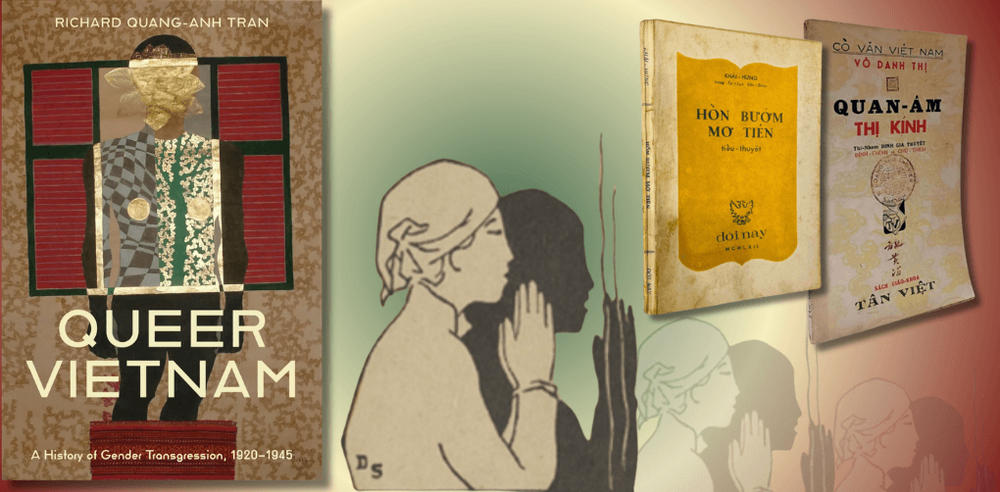
Queer Vietnam: A History of Gender Transgression, 1920–1945 by Richard Quang-Anh Tran reexamines the cultural history of late French colonial Vietnam through the lens of gender and sexual variance. Focusing on the interwar period (1920–1945), the book challenges the dominant assumption that Western imperial modernity uniformly narrowed and pathologized non-normative genders and sexualities across Asia. In Vietnam, Tran argues, the picture was more complex and uneven.
Opening with a reading of Khái Hưng’s serialized novella Hồn Bướm Mơ Tiên (Butterfly Soul Dreaming of an Immortal), the book situates modern literary experimentation alongside much older narrative traditions. The story of a young man who falls in love with a monk later revealed to be a woman echoes the premodern Buddhist tale of Quan Âm Thị Kính, in which a woman lives as a monk and whose biological sex is only discovered after death. By placing these texts in dialogue, Tran shows that cross-dressing and gender transformation were not marginal anomalies but recurring cultural motifs. Such narratives raised persistent questions about the constitution, limits, and instability of gender in Vietnamese thought.
Rather than reading these stories solely as affirmations of binary gender norms, Tran demonstrates that they can also be understood as explorations of erotic ambiguity and gendered embodiment. The distinction between desire for the monk and desire for the woman, for example, remains unsettled, suggesting that same-sex desire was thinkable—even if not named in modern identity terms. Across short stories, poetry, reform theater, urban reportage, and journalistic accounts, hundreds of narratives involving gender-crossing and sexual variance circulated in the public sphere of interwar Vietnam.
The broader historical context is crucial. The late nineteenth and early twentieth centuries were marked by colonial transformation, the rise of capitalism, new state systems, and the spread of modern science. In many parts of Asia, these forces, coupled with Western sexology, reorganized sexual norms and delegitimized previously tolerated practices. Yet in Vietnam, Sino-Vietnamese and Southeast Asian traditions that allowed greater flexibility in gender and sexual expression persisted well into the twentieth century. While European discourses on sex and gender entered Vietnamese culture, sexology’s pathologizing framework had not yet become the dominant interpretive lens.
Tran thus argues that a far more capacious vision of gendered personhood existed in this period than scholars have previously assumed. Importantly, the book also clarifies its use of the term “queer.” Rather than simply mapping contemporary LGBT identities onto the past, Queer Vietnam employs “queer” to describe historical subjects who departed from the ideological fiction that aligns biological sex, gender expression, desire, and social role into neat binary oppositions. By examining moments when these alignments fractured, the book rethinks both the periodization of Vietnamese modernity and the conceptualization of sexual modernity more broadly.
In bringing queer figures from the margins of historiography to the center of Vietnam’s cultural archive, Queer Vietnam opens new directions for understanding colonial modernity, literary innovation, and the dynamic plasticity of gender in Vietnamese history.
Read more about the book on Stanford University Press's website.