

Những lá thư thời chiến với lịch sử, truyền thống và văn hóa dân tộc (Wartime Letters and Their Significance for Vietnamese History, Traditions, and Culture) is a collection of scholarly papers presented at a conference held in Hanoi on July 25, 2017, commemorating the 70th anniversary of Vietnam's War Invalids and Martyrs Day. The conference was organized by the Center for Research, Preservation and Promotion of National Culture (Trung tâm Nghiên cứu, Bảo tồn và Phát huy Văn hóa Dân tộc), in collaboration with the Vietnamese Association of Historical Sciences (Hội Khoa học Lịch sử Việt Nam), the War Remnants Museum (Bảo tàng Chứng tích Chiến tranh), the Forever Twenty Fund (Quỹ Mãi mãi tuổi 20), and the initiative Every Incense Offering, a Heartfelt Tribute (Hành trình “Mỗi nén hương một tấm lòng”). The proceedings bring together more than 30 contributions from historians, researchers, educators, journalists, military veterans, former political prisoners, students, and relatives of wartime participants. The papers examine the historical, cultural, literary, and educational significance of wartime correspondence, particularly the collection Những lá thư thời chiến Việt Nam, compiled by writer Đặng Vương Hưng. They explore wartime letters as primary historical sources, documenting personal experiences, family relationships, patriotism, sacrifice, and the social and emotional dimensions of war. The collection also addresses the preservation of wartime correspondence as documentary heritage, its potential applications in historical education, and its role in transmitting collective memory across generations. As an interdisciplinary resource, the proceedings offer valuable perspectives for researchers studying Vietnamese history, cultural heritage, war and memory, personal correspondence, and national identity.

Những lá thư thời chiến Việt Nam (Letters from Wartime Vietnam) is a collection of personal letters written during Vietnam's twentieth-century wars, compiled and introduced by Vietnamese writer and veteran Đặng Vương Hưng. Published by the People's Public Security Publishing House in 2015 to commemorate the 40th anniversary of Vietnam's reunification, the volume brings together correspondence from soldiers, civilians, revolutionaries, and their families. The letters offer firsthand perspectives on wartime experiences, documenting personal relationships, family life, patriotism, sacrifice, and the emotional realities of conflict. Accompanied by historical background and biographical information, the collection preserves intimate accounts of individuals whose lives were shaped by war. As a compilation of primary historical sources, the book provides valuable material for researchers interested in Vietnamese history, war and memory studies, social history, and personal narratives. It also contributes to the preservation of Vietnam's documentary heritage by bringing together letters and personal records that might otherwise have remained in private family collections.
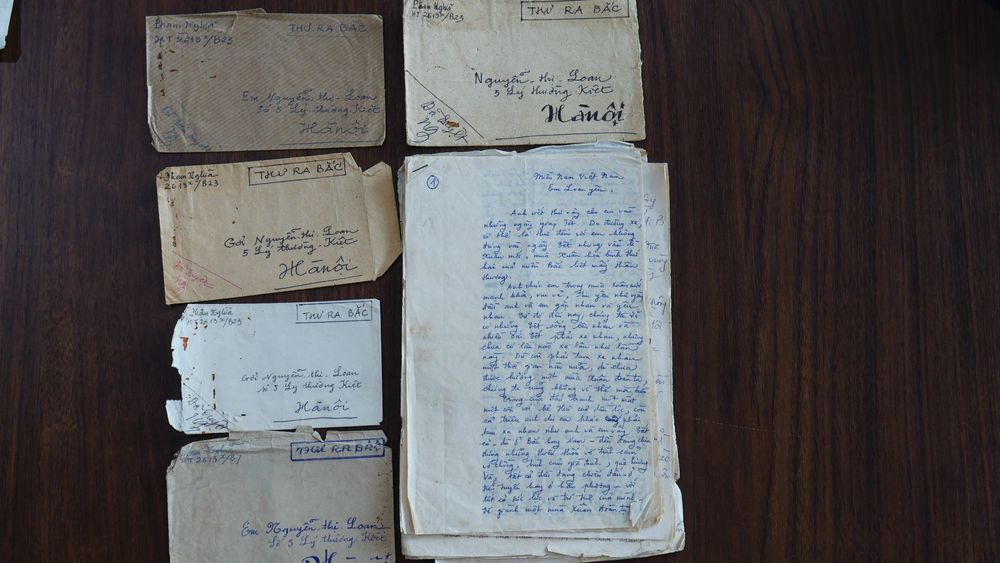
Letters to the North (Thư ra Bắc) is a collection of handwritten letters and envelopes sent by wartime correspondent Phạm Nghĩa to his wife, Nguyễn Thị Loan, who worked at the Vietnam News Agency (Thông tấn xã Việt Nam). The envelopes, marked “Thư ra Bắc” (Letters to the North), bear no postage stamps, reflecting the distinctive circumstances of correspondence during wartime. The collection includes handwritten letters on aging paper, accompanied by their original envelopes addressed to Nguyễn Thị Loan at 5 Lý Thường Kiệt Street, Hanoi. The envelopes bear handwritten markings and identification codes, while the letters offer a personal glimpse into the experiences, emotions, and relationships of individuals separated by war. Beyond their significance as intimate exchanges between husband and wife, these documents provide valuable insights into the personal lives of Vietnamese wartime journalists and their families. The collection illustrates how correspondence helped sustain emotional connections across geographical distances and the disruptions of war. As primary historical sources, these letters contribute to the documentation of Vietnam's wartime history, particularly the experiences of journalists working in conflict zones. Their preservation offers researchers an opportunity to explore the intersections of journalism, family life, personal memory, and the social history of war.
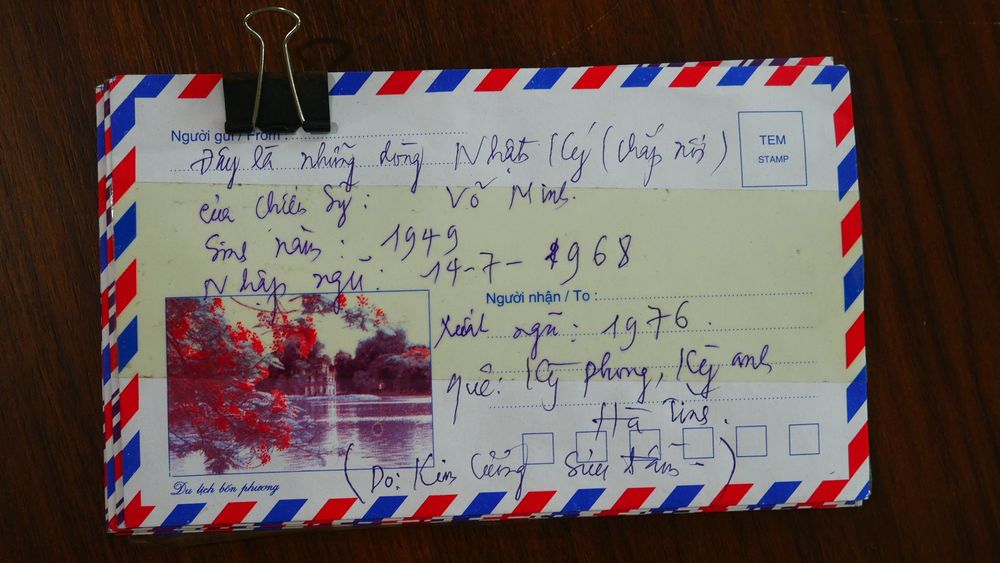
The Diary of Võ Minh (Nhật ký Võ Minh ) is a collection of personal wartime writings by Vietnamese veteran Võ Minh, the husband of fellow veteran Kim Cương, who currently resides in Hà Tĩnh Province, Vietnam. The collection is preserved in a folder bearing handwritten notes that identify the contents as diary entries and writings by Võ Minh. The cover records his birth year as 1949, his military enlistment date as July 14, 1968, and his discharge year as 1976. It also lists several locations, including Kỳ Phương, Kỳ Anh, and Hà Tĩnh, providing geographical context for his personal history. As a collection of personal manuscripts, Nhật ký Võ Minh offers a potential source for understanding the experiences of Vietnamese soldiers during and after the Vietnam War. The materials may provide insights into military service, personal reflections, and the relationship between individual lives and broader historical events. Beyond their historical significance, these writings represent a form of personal documentary heritage, preserving the memories and experiences of a veteran whose life was shaped by war. The collection contributes to the study of Vietnam's social and military history, particularly the role of personal diaries and family archives in documenting wartime experiences and preserving individual and collective memory.
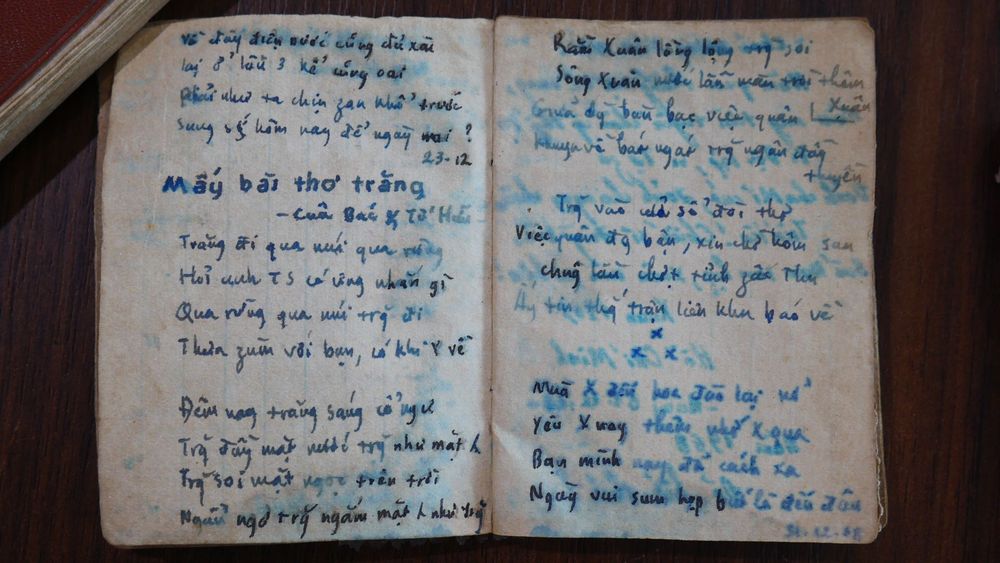
Poetry Notebook(Sổ tay thơ ) is a handwritten collection of poems, personal reflections, and literary excerpts compiled during the Vietnam War. Most of the dated entries are from the latter half of 1968. The notebook contains personal compositions alongside poems copied from other authors, reflecting practices of writing, collecting, and sharing poetry during wartime. The identity of the compiler remains unknown. The full chronological scope of the notebook and the authorship of individual poems require further examination and verification. The notebook explores themes of love, separation, homesickness, friendship, military life, and the anticipation of reunion. Poems such as Sinh nhật Mùa thu (Autumn Birthday), Nhớ Đông (Remembering Đông), and Mấy bài thơ trăng (Moon Poems) express intimate emotions intertwined with wartime experiences. Some verses refer to the Trường Sơn Mountains, military marches, and memories of loved ones. Entries dated between September and December 1968 suggest that the notebook may have served as a means of preserving personal experiences, observations, and emotions through poetry. The notebook also reflects the circulation of poetry within personal networks and military communities during the war. Several poems include attributions to other authors, suggesting that the compiler may have transcribed works encountered through reading, listening, or exchanges with others. This practice offers a glimpse into informal literary culture, in which handwritten notebooks served as a means of preserving and sharing poetry outside formal publishing channels. Physically, the notebook is small and consists of aged, yellowed pages, with most of the text handwritten in blue ink. Ink stains, faded handwriting, corrections, and worn page edges bear traces of its use and preservation over time. As a primary historical and literary source, Sổ tay thơ is valuable for studying wartime poetry, everyday life, personal memory, and the relationship between literature and lived experiences of war. The notebook contributes to the preservation of Vietnam's personal documentary heritage while offering insights into how individuals used poetry to express emotions, maintain personal connections, and record their experiences during the war years.