Introducing Global Vietnam: A New International Forum for Vietnamese Studies
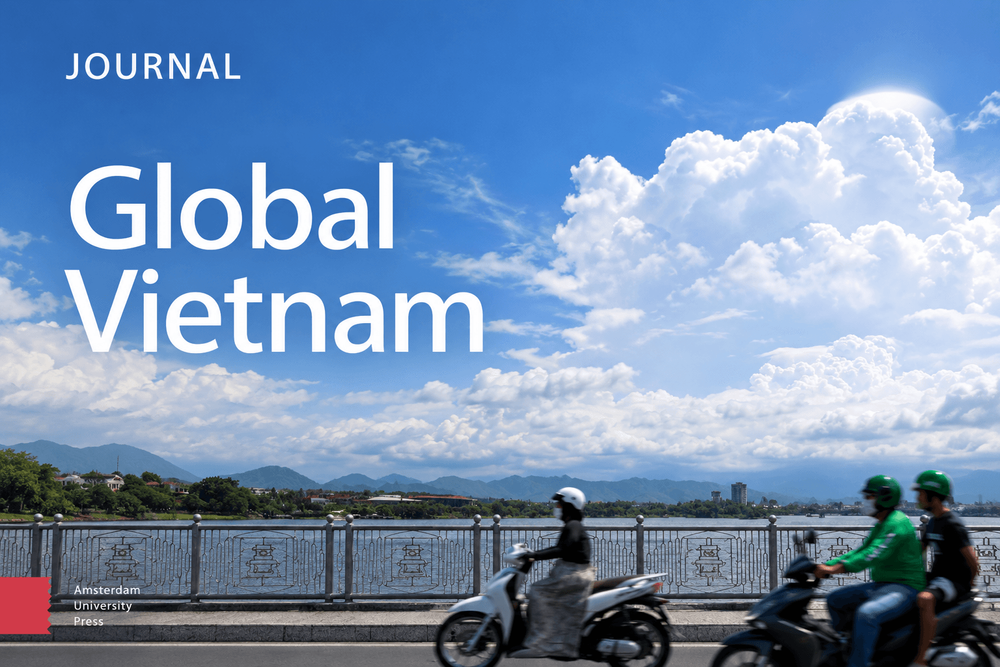
Digitizing Việt Nam is pleased to introduce Global Vietnam, a new academic journal published by Amsterdam University Press. Edited by scholars Phan Lê Hà and Liam C. Kelley, the journal seeks to foster interdisciplinary dialogue, connect diverse scholarly traditions, and advance new perspectives on Vietnam's historical, cultural, and intellectual relationships with the wider world.
The launch of Global Vietnam marks an important development in the evolving landscape of Vietnamese Studies. At a time when scholarship on Vietnam is increasingly produced across national, linguistic, and disciplinary boundaries, the journal offers a new platform for scholars to exchange ideas, challenge established interpretations, and explore Vietnam's place in global histories and contemporary societies.
Its inaugural issue, published in 2026, brings together five research articles spanning more than two millennia of Vietnamese history, from the ancient Nanyue (Nam Việt) Kingdom to religious transformations in postwar Vietnam. Together, these contributions demonstrate how new sources, comparative approaches, and interdisciplinary methodologies can deepen our understanding of Vietnam and its connections with the world.
Rethinking Vietnamese Studies in a Global Context
In their foreword to the inaugural issue, editors-in-chief Phan Lê Hà and Liam C. Kelley reflect on more than two decades of changes in the production and circulation of knowledge about Vietnam.
The journal's intellectual foundations are closely connected to Engaging With Vietnam: An Interdisciplinary Dialogue (EWV), an academic initiative established by Phan Lê Hà at Monash University in Australia in 2009. Initially conceived as a space for examining differences between scholarship produced in Vietnam and in Western academic institutions, particularly those in English-speaking countries, EWV gradually evolved into an international network bringing together researchers from increasingly diverse geographical and intellectual backgrounds.
Over the past two decades, the globalization of higher education has profoundly transformed Vietnamese Studies. Research on Vietnam is no longer concentrated primarily in Vietnam and traditional Anglophone academic centers. Scholars working in China, Taiwan, Japan, South Korea, Southeast Asia, Europe, and elsewhere are contributing new perspectives through different languages, research traditions, and institutional environments.
This diversification has expanded not only where knowledge about Vietnam is produced, but also how Vietnam is studied. Increasingly, researchers are examining Vietnamese history, society, and culture through transnational connections, comparative frameworks, and interdisciplinary approaches.
It is within this changing intellectual landscape that Global Vietnam positions itself.
The journal aims to provide a forum for scholarship that places Vietnam in dialogue with the world while remaining attentive to local experiences, historical particularities, and cultural complexity. Its scope encompasses the humanities, social sciences, arts, and education, welcoming contributions that cross disciplinary and geographical boundaries.
Importantly, the editors also acknowledge the challenges facing humanities and qualitative social science research in an academic environment increasingly shaped by STEM priorities, artificial intelligence, global university rankings, and publication pressures. By creating a dedicated space for interdisciplinary and qualitative scholarship, Global Vietnam seeks to support forms of knowledge production that remain essential to understanding societies, histories, and cultures.
The journal also recognizes the importance of linguistic diversity. Although English will serve as its primary publication language, it plans to publish selected contributions in Vietnamese, reflecting a commitment to broadening participation in international scholarly conversations.
Exploring Vietnam Through New Historical Perspectives
The inaugural issue offers a compelling illustration of the journal's intellectual vision. Its five research articles revisit familiar historical subjects, introduce new evidence, and explore connections that transcend conventional geographical and disciplinary boundaries.
The opening article, “Divergent Paths From a Common Origin: Law and Governance in the Nanyue Kingdom Through Wooden Slips and Historical Records,” by Liao Xiaoying, Nguyễn Tuấn Cường, and Liam C. Kelley, examines the ancient Nanyue Kingdom (204/203–111 BCE) and the historical legacy of its founder, Zhao Tuo (Triệu Đà).
Drawing attention to archaeological discoveries in Guangdong, particularly textual evidence preserved on wooden slips, the authors reconsider how the Nanyue Kingdom has been studied and interpreted. Their discussion highlights differences between Chinese and Vietnamese historical scholarship and demonstrates how newly available archaeological materials can open fresh perspectives on longstanding historical debates.
Moving to the Trần dynasty, Cuong T. Mai's “The Earth and the Rivers, the Dead and the Dao: Traces of Court Daoism in 13th- and 14th-Century Đại Việt” investigates the role of Daoist ritual practices in medieval Vietnamese political and religious life.
Through an examination of a fourteenth-century bronze-bell inscription associated with the Daoist Thông Thánh Abbey, the article explores the activities of Xu Zongdao, a Chinese Daoist priest who fled Song China and introduced certain ritual practices to the Trần court. By bringing Vietnamese historical sources into conversation with scholarship on Chinese Daoism, the study illuminates the religious exchanges and cultural adaptations that shaped medieval Đại Việt.
The third article, Liam C. Kelley's “Chinese as a Language of Reform in Early-20th-Century Vietnam,” challenges conventional understandings of linguistic and intellectual transformation during the colonial period.
Rather than viewing the decline of classical Chinese simply as the inevitable replacement of an outdated intellectual tradition by modern Vietnamese written in quốc ngữ, Kelley examines how reform-minded Vietnamese scholars continued to use Chinese to transmit new ideas and knowledge. His research highlights the role of French colonial policies in restricting these intellectual exchanges and invites readers to reconsider the multilingual foundations of Vietnamese modernity.
Cultural exchange takes a different form in “Accordion Parallels in Vietnam and China,” by Stan BH Tan-Tangbau and Lưu Quang Minh.
Tracing the accordion's development in Vietnam and China, from its introduction through Russian émigré communities in Hải Phòng and Harbin to its use in wartime artistic performances and eventual emergence as a concert instrument, the authors reveal striking parallels between the musical histories of the two countries. Their study demonstrates how the history of a musical instrument can illuminate broader processes of political transformation, cultural exchange, and artistic development.
The issue concludes with Nguyễn Sử's “Negotiating Buddhist Unity in Postwar Vietnam, 1975–1981,” which examines the complex process leading to the establishment of the Vietnam Buddhist Sangha in 1981.
Drawing on archival materials, Buddhist publications, and interviews, the article explores the differing perspectives of Buddhist leaders, organizations, and communities during the early postwar period. By examining debates over religious practices, institutional leadership, and Buddhism's place in socialist society, the study offers a nuanced account of religious unification that moves beyond simplified institutional narratives.
Together, these five articles demonstrate the richness of Vietnamese historical scholarship and the value of bringing different sources, methodologies, and intellectual traditions into dialogue.
Connecting Scholarship, Cultural Heritage, and Digital Humanities
The establishment of Global Vietnam also invites reflection on the changing infrastructures through which knowledge about Vietnam is preserved, accessed, interpreted, and shared.
For initiatives such as Digitizing Việt Nam, a collaborative digital humanities project developed by Columbia University and Fulbright University Vietnam, the journal's vision resonates with an equally important question: How can Vietnamese historical and cultural resources become more accessible to scholars, students, and communities across geographical and institutional boundaries?
The research featured in the inaugural issue demonstrates the continuing importance of primary sources. Archaeological records, historical inscriptions, classical texts, musical histories, and religious archives provide the foundations upon which new interpretations of Vietnam's past can emerge.
Yet many such materials remain dispersed across libraries, archives, museums, private collections, and research institutions worldwide. Differences in language, cataloging practices, institutional access, and preservation conditions can make it difficult for researchers to discover and compare them.
Digital humanities initiatives can help address some of these challenges.
Through the digitization, description, contextualization, and connection of historical and cultural materials, platforms such as Digitizing Việt Nam seek to make Vietnamese heritage more accessible while creating new opportunities for interdisciplinary research, education, and public engagement.
The relationship between scholarly publishing and digital humanities is therefore particularly meaningful.
While academic journals provide spaces for developing arguments, presenting evidence, and advancing scholarly debates, digital research platforms can help expand access to the sources that make such scholarship possible.
Both contribute to a broader intellectual ecosystem in which knowledge about Vietnam can circulate across institutional, linguistic, and national boundaries.
The commitment of Global Vietnam to bringing together scholars working in different languages and academic traditions also echoes Digitizing Việt Nam's interest in fostering connections among diverse communities of knowledge. Historical understanding becomes richer when sources and interpretations can move beyond the institutions and intellectual traditions in which they were originally produced.
At the same time, greater accessibility does not eliminate the need for careful historical interpretation. Digital technologies can facilitate discovery, comparison, and collaboration, but meaningful scholarship continues to depend on linguistic expertise, contextual knowledge, critical analysis, and sustained engagement with primary sources.
In this sense, the development of new scholarly journals and digital humanities platforms represents complementary efforts to strengthen the foundations of Vietnamese Studies.
Toward a More Connected Future for Vietnamese Studies
The launch of Global Vietnam reflects a broader transformation in how Vietnam is studied, interpreted, and represented within international scholarship.
Vietnamese Studies has long benefited from the contributions of scholars working across different countries and intellectual traditions. What is increasingly significant today is the opportunity to bring these perspectives into more sustained dialogue, recognizing that knowledge about Vietnam is produced through multiple languages, methodologies, historical experiences, and institutional contexts.
As Phan Lê Hà and Liam C. Kelley emphasize in their foreword, the journal aspires to nurture scholarship emerging from the movement and interaction of people, communities, ideas, and forms of knowledge across the world.
Its inaugural issue offers a promising beginning, demonstrating how established historical questions can be revisited through new evidence and comparative perspectives.
Looking ahead, Global Vietnam also intends to welcome a wide range of scholarly contributions, including research articles, conceptual essays, book reviews, debates, and opinion pieces. This openness creates opportunities for emerging and established scholars alike to participate in conversations that extend beyond conventional disciplinary and geographical boundaries.
For Digitizing Việt Nam, the arrival of this new journal is a welcome development in the growing international ecosystem of Vietnamese Studies. It reinforces the importance of building connections not only among scholars and institutions, but also among historical sources, cultural collections, research methodologies, and the communities whose histories and experiences they represent.
Digitizing Việt Nam warmly congratulates the editors and contributors on the launch of Global Vietnam and looks forward to the new scholarship, intellectual exchanges, and collaborations that this journal will inspire.
Explore Global Vietnam:
Global Vietnam, Volume 1, Issue 1 (2026)
Editors-in-Chief: Phan Lê Hà and Liam C. Kelley
Publisher: Amsterdam University Press
Institutional Sponsor: National Chung Cheng University
Read the inaugural issue here