Mạ Folktales: A Collection of Mạ People's Voices
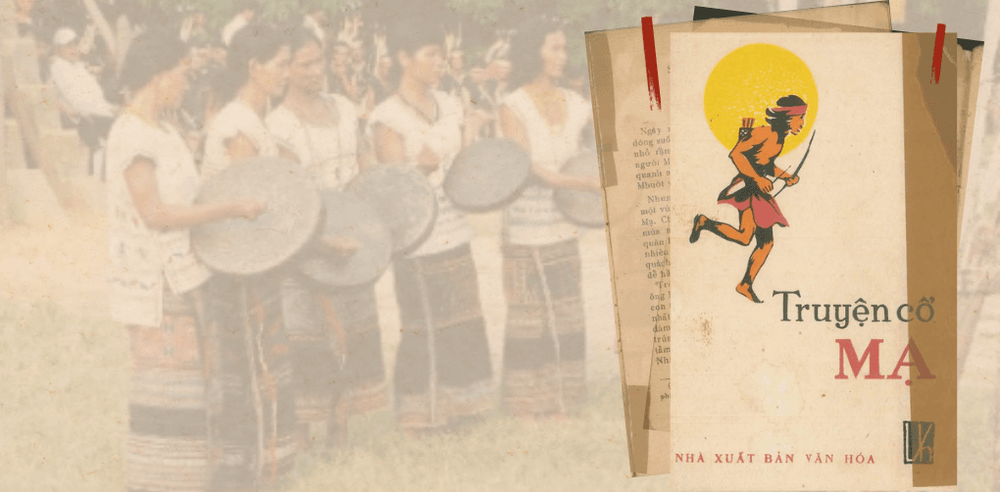
Digitizing Vietnam is pleased to introduce “Truyen Co Ma”, a collection of folktales of Ma people collected by Ta Van Thong and published in 1986 by Ha Noi Culture Publishing House. The twenty one folktales, with an introduction of the Ma people, their customs and practices, provides a gateway into the life of an ethnic group in Vietnam, conveying their values and way of life. More than just interesting stories, the book is a work of ethnic language and cultural preservation that adds to the heritage of Ma people and the diversity of Vietnam.
Ma people is an ethnic minority group that has long resided in southern Central Highlands of Vietnam. They concentrate mostly in Dalat plateau, across Lam Dong province, and bordering Cat Tien national park. They are a Mon-Khmer indigenous people whose language is part of the Mon-Khmer group, resembling that of other ethnic groups such as Mnong, Cho Ro, and Koho people. According to a 2019 census, there are about 50,000 Ma people, of which about twenty percent knows how to write and read Ma language, but less than five percent knows the traditional songs and rhymes. In that context, Ta Van Thong’s translation and collection of the folktales help to preserve and disseminate an ethnic culture, adding the rich oral tradition of Ma people to the national body of literature.
Ta Van Thong, a scholar of Vietnam Academy of Social Sciences, has long engaged with linguistic and contributed to the study and preservation of ethnic languages. In collecting these folktales, he selected those most representative of the values and lives of Ma people. As he remarked that Ma people believed in a supernatural world beyond the physical one, capable of influence human activities, the folktales shared by Ma people consistently narrate instance of divine intervention, where deity and nature alike provide relief and magical artifact to help human in their plight. In addition, he identified common themes among these stories which are the archetype of deities and demons, as well as morals of good and evil, fairness and kindness, love and courage. Throughout all twenty one folktales, from creation myths, fables, to simple narratives of drama between humans, the stories celebrated the triumph of kindness and good, rewarding the kind-hearted characters with riches through act of divine benevolence, who then shared their newfound wealth with others while the cruel ones got punished and isolated.
What makes this book not simply a preservation of oral tradition but also of language is the retain of Ma language’s proper name and words for the relevance to the plot and the moral of the story. For example, in the folktale “The legend of Cat Tien bank and Da Dong River” in which a people rose to defend themselves against a ruthless invading army, the man sent to help the people came from a meteor from the sky and was aptly named “Sor-manh” which means “a star” in Ma language. Even though the character appeared in only one scene, Ta Van Thong kept the Ma name to highlight the importance of such a character, who was a son of the god Giang Nau, the god of creation, asking his father permission to descend and bestow help upon the people as he learned of their struggle. Such retain of Ma language is consistent throughout the book, intimating the belief system of a people beyond snippet of a language or a naming convention.
It is also interesting to note that Ta Van Thong appended at the end of each folktale a note of who shared the tale to him. Through each folktale, he brought Ma people that much closer to the reader, not only through the stories, but also through the real Ma people who had lived and passed down these stories, made tangible the oral tradition that Digitizing Vietnam helps preserve today.
Explore “Truyen Co Ma” on Digitizing Vietnam.