Mekong & Metaphor: Contemporary Art & Regionality in Southeast Asia
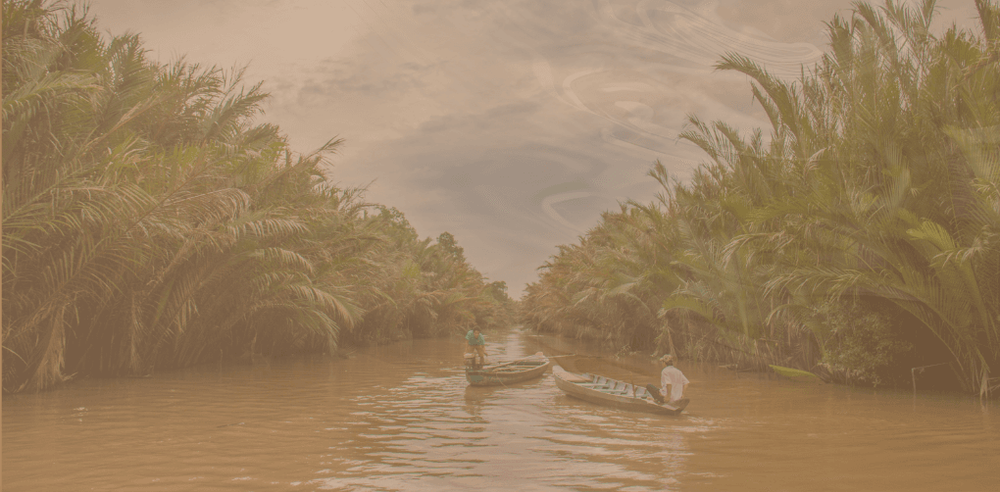
In her essay "Mekong and Metaphor: Contemporary Art and Regionality in Southeast Asia", art historian Pamela Corey invites us to rethink the Mekong beyond its geographical and political definitions. Rather than treating it simply as a river or the framework of the Greater Mekong Subregion, she argues that the Mekong functions as a metaphor—a shared space where ecology, memory, spirituality, and everyday life intersect across national borders. Dr. Corey distinguishes between "regionalism", the institutional effort to construct a regional identity through policies, exhibitions, and organizations, and "regionality", the more subtle sense of belonging that emerges from shared landscapes, histories, and lived experiences.
The essay traces how contemporary Southeast Asian art has moved away from representing the Mekong as a fixed symbol of the region. Instead, recent works of art and film have increasingly turned their attention toward microhistories and human geographies. Through an analysis of works by Apichatpong Weerasethakul and Nguyễn Trinh Thi presented at the Thailand Biennale 2023, Dr. Corey argues that the Mekong is no longer represented merely as a geographical entity, but instead evokes diverse riverine imaginaries with multiple dimensions of time and realness. Automated curtains, sound installations activated by water-level data, and constantly shifting landscapes become artistic devices for expressing nonlinear temporalities, environmental uncertainty, dreams, and the fragile connections among communities that share the river. The works of Apichatpong Weerasethakul and Nguyễn Trinh Thi do not simply represent the Mekong region; rather, they evoke contemporary reflections on the river itself — its nonlinear movements of time, the vulnerability of life, and the hidden layers of reality revealed through dreams.
For communities living along the Mekong, the river is understood through an interplay of scientific knowledge and local narratives, where ecological observations coexist with stories, beliefs, and inherited memories. At the same time, the Mekong has become a metaphor for nonlinear temporalities, where the past, present, and possible futures merge in mourning of some inarticulable loss.
Read more at https://bit.ly/mekong-metaphor