Modernity and Re-enchantment: Religion in Post-revolutionary Vietnam
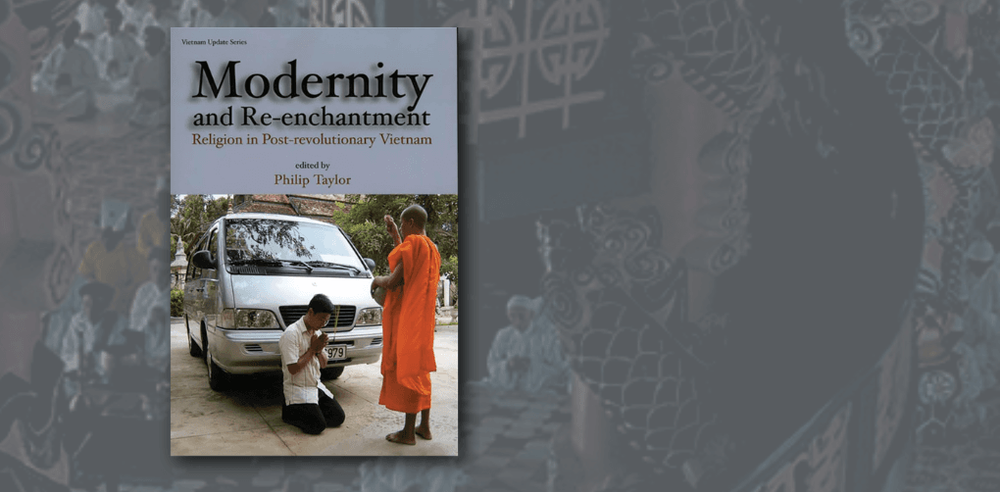
As societies become increasingly modern, do people still need religion? This has been one of the central questions in the social sciences throughout the twentieth century. Many scholars once argued that modernization, industrialization, and scientific progress would gradually diminish the role of religion in everyday life. Yet Vietnam's experience after Đổi Mới offers a very different perspective.
In Modernity and Re-enchantment: Religion in Post-revolutionary Vietnam (2007), edited by anthropologist Philip Taylor, twelve leading scholars present a comprehensive account of the transformation of religious life in Vietnam since 1986. Rather than treating religion as a relic of the past or as something that merely "survived" the revolution, the volume demonstrates how religious beliefs and practices have continuously adapted to the profound social, economic, and political changes of modern Vietnam.
Drawing on extensive ethnographic research conducted across different regions of the country, the collection explores the remarkable diversity of Vietnam's religious landscape—from ancestor worship, spirit mediumship (lên đồng), and popular religious traditions to Buddhism, Catholicism, and transnational religious networks. Each case study illustrates that religion has not stood apart from Vietnam's modernization. Instead, it has actively participated in shaping personal identities, community relationships, economic life, historical memory, and the ways people seek meaning in a rapidly changing society.
One of the book's most significant contributions is its use of the concept of "re-enchantment." While Max Weber introduced the idea of "disenchantment" to describe an increasingly rationalized modern world, Philip Taylor argues that Vietnam reveals a different trajectory. Rather than eroding religion, modernization and global integration have created new conditions for religious beliefs and practices to revive, adapt, and flourish. In other words, modernization does not necessarily lead to secularization.
Beyond its theoretical insights, Modernity and Re-enchantment is widely recognized for its rich ethnographic evidence and interdisciplinary approach, bringing together anthropology, history, sociology, and religious studies. Nearly two decades after its publication, it remains one of the foundational works on contemporary Vietnamese religion and continues to be widely cited in scholarship on Vietnamese studies, Southeast Asian studies, and the anthropology of religion.
For anyone interested in Vietnam's cultural history, popular beliefs, or the relationship between tradition and modernity, this volume offers not only compelling case studies but also a thought-provoking question that remains highly relevant today: Does modernization truly make the world less "enchanted," or does it give rise to new forms of religious practice and spiritual experience?