Beyond the Battlefield: Wartime Letters, Diaries, and the Personal Memories of Vietnam’s History
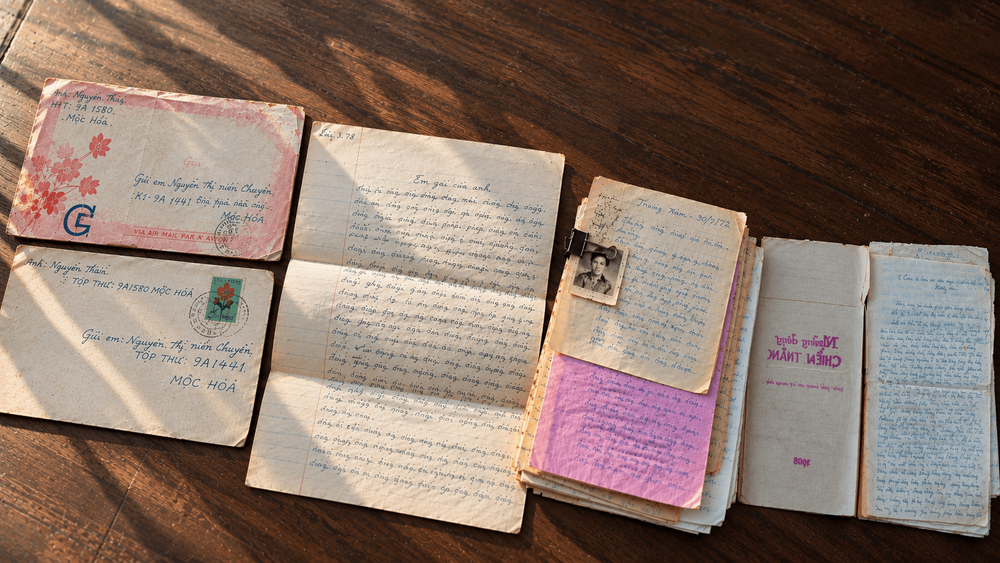
Introducing the Wartime Letters and Diaries Collection on Digitizing Vietnam
History is often told through major events, political decisions, military campaigns, and the lives of prominent figures. Yet behind these larger historical narratives are countless personal stories—of families separated by war, letters written across great distances, friendships sustained through uncertainty, and individuals who turned to diaries and poetry to record their experiences, hopes, and emotions.
These intimate accounts offer a different way of understanding Vietnam’s twentieth-century history. They remind us that war was not only experienced on battlefields but also in homes, relationships, and the everyday lives of ordinary people.
Digitizing Vietnam is pleased to introduce the Wartime Letters and Diaries Collection (Những Lá thư và Nhật ký Thời chiến), a growing digital collection bringing together handwritten correspondence, personal diaries, poetry notebooks, photographs, envelopes, and related publications documenting the experiences of Vietnamese people during wartime.
Through the preservation and presentation of these materials, the collection seeks to make personal memories more accessible to researchers, educators, students, and the wider public while recognizing their significance as part of Vietnam’s historical and cultural heritage.
Personal Stories Behind Historical Events
Among the most compelling materials in the collection are the handwritten letters exchanged between war correspondents and their families.
The Thư ra Bắc (Letters to the North) collection preserves correspondence from Phạm Nghĩa, a wartime journalist, to his wife Nguyễn Thị Loan, who worked for the Vietnam News Agency in Hanoi.
The original envelopes, some bearing the handwritten words Thư ra Bắc rather than postage stamps, offer fascinating glimpses into the communication networks of wartime Vietnam. Their handwritten addresses, markings, and codes are themselves historical evidence, revealing how personal correspondence traveled under extraordinary circumstances.
Yet the greatest significance of these letters lies in their deeply human content. Beyond the professional responsibilities of a war correspondent, they reveal the emotional world of a husband and wife separated by conflict, maintaining their relationship through written words.
Such documents invite us to consider questions that conventional military histories rarely address: How did families maintain emotional connections during prolonged separation? How did individuals communicate affection, concern, and hope amid uncertainty? What can private correspondence reveal about the everyday experiences of those who witnessed history firsthand?
Diaries and Poetry as Records of Everyday Life
The collection also includes personal notebooks that illuminate the intellectual and emotional lives of individuals during wartime.
One particularly evocative item is a handwritten poetry notebook dating primarily from the second half of 1968. Its pages contain original compositions alongside poems copied from other writers, exploring themes of love, separation, friendship, homesickness, military life, and the longing for reunion.
Some poems refer to the Trường Sơn mountains and military journeys, while others dwell on intimate memories and personal relationships.
The identity of the notebook's compiler remains unknown, and the authorship of several poems requires further investigation. Nevertheless, the notebook offers valuable evidence of how poetry circulated informally among individuals and military communities.
Long before digital communication, handwritten notebooks served as personal archives, spaces for literary expression, and means of preserving emotional connections. They also reveal a literary culture extending beyond officially published works.
Another important component is the diary of Võ Minh, a Vietnamese veteran born in 1949 who enlisted in July 1968 and was discharged in 1976. Preserved as a collection of personal writings, his diary offers opportunities to investigate the relationship between individual experience, military service, and the broader transformations of Vietnamese society.
Together, these materials demonstrate how personal writing can preserve aspects of historical experience that might otherwise remain undocumented.
From Private Memories to Shared Cultural Heritage
Letters and diaries occupy a distinctive position within historical archives.
Unlike official records, which are generally created for administrative, political, or institutional purposes, personal writings often emerge from immediate emotional and practical needs. Their authors may never have imagined that their words would one day become historical documents.
Many such materials have survived through the care of families, collectors, and individuals who recognized their significance. Others remain vulnerable to deterioration, dispersal, or permanent loss.
The physical characteristics of these documents—the faded ink, aging paper, handwritten corrections, postal markings, and worn edges—are also essential parts of their historical value.
They reveal not only what people wrote but also how documents were created, exchanged, used, and preserved.
Digitization offers an opportunity to safeguard these fragile materials while expanding access to them. By presenting digital reproductions alongside descriptive information, Digitizing Vietnam seeks to preserve both the textual content and the material characteristics of these historical sources.
Importantly, digitization also allows documents that were once accessible only within private collections or family archives to become part of a broader scholarly and public conversation.
New Possibilities for Historical Research
The Wartime Letters and Diaries Collection offers valuable resources for interdisciplinary research.
For historians, personal correspondence and diaries can complement official archives by providing firsthand accounts of everyday life, social relationships, and individual experiences during wartime.
For scholars of literature and cultural history, poetry notebooks and personal writings offer insights into informal literary practices, emotional expression, and the circulation of texts outside conventional publishing institutions.
Researchers interested in memory studies can explore how individuals remembered, narrated, and interpreted their experiences, as well as how subsequent generations have preserved and transmitted those memories.
The collection also raises important methodological questions. How should historians interpret highly personal documents? What can handwritten annotations, postal markings, and material traces reveal beyond the written text? How can researchers responsibly reconstruct historical contexts when the identity of an author or the circumstances surrounding a document remain uncertain?
These questions highlight the importance of treating personal archives not simply as illustrations of established historical narratives but as historical sources deserving careful examination in their own right.
Connecting Generations Through Digital Heritage
Beyond academic research, the collection has significant potential for education and public engagement.
For younger generations who did not experience war directly, personal letters and diaries provide an accessible and emotionally resonant entry point into history.
A handwritten letter between spouses or a poem about homesickness can make historical experiences more immediate and relatable than dates and statistics alone.
These materials can support classroom teaching, intergenerational conversations, community exhibitions, oral history projects, and other initiatives that encourage people to engage with the past through individual experiences.
They may also inspire families and communities to reconsider the historical significance of documents preserved in their own homes.
A letter kept in a family drawer, an old notebook, or a faded photograph may contain information of value not only to its owners but also to future generations of researchers.
In this sense, the collection is not simply about preserving the past. It is also about encouraging new relationships between personal memory, community heritage, and historical scholarship.
A Collaborative Effort to Preserve Vietnam’s Documentary Heritage
The collection also demonstrates the importance of collaboration between individual collectors and digital heritage initiatives.
Digitizing Vietnam extends its sincere appreciation to journalist and writer Đặng Vương Hưng, whose longstanding efforts to collect and preserve wartime correspondence have made these materials available for inclusion in the collection.
His contributions include the important anthology Những lá thư thời chiến Việt Nam (Wartime Letters of Vietnam), published in 2015, which brings together personal letters from individuals whose lives were shaped by twentieth-century conflicts.
The digital collection also features the proceedings of the 2017 academic conference Những lá thư thời chiến với lịch sử, truyền thống và văn hóa dân tộc (Wartime Letters in Relation to National History, Traditions, and Culture). Bringing together more than thirty scholarly contributions, the proceedings explore the historical, literary, cultural, and educational significance of wartime correspondence.
By bringing together original documents, published anthologies, and scholarly research, the collection creates opportunities for dialogue between personal archives and academic interpretation.
It also illustrates how collaboration among collectors, researchers, cultural institutions, and digital platforms can help preserve documentary heritage and make it available to wider audiences.
Keeping Personal Histories Alive
Every letter, diary, and notebook in this collection represents an individual attempt to communicate, remember, or make sense of life during extraordinary circumstances.
Some were written with the expectation of receiving a reply. Others were intended only for the writer. Many have survived for decades, carrying traces of relationships, emotions, and experiences that might otherwise have disappeared.
Their significance extends beyond the events they describe. They remind us that history is made not only through public actions and major decisions but also through everyday experiences, personal relationships, and individual acts of remembrance.
By preserving and sharing these materials, Digitizing Vietnam hopes to contribute to a more inclusive understanding of Vietnam’s past—one that recognizes the historical importance of ordinary voices alongside official narratives.
Every personal document has a history. Every preserved memory offers another way to understand the past.
We invite researchers, educators, students, and the public to explore the collection and discover the personal stories preserved within its pages.
Explore the collection: Wartime Letters and Diaries