Islam in Vietnam: A Journey Through the Lens of the Cham People
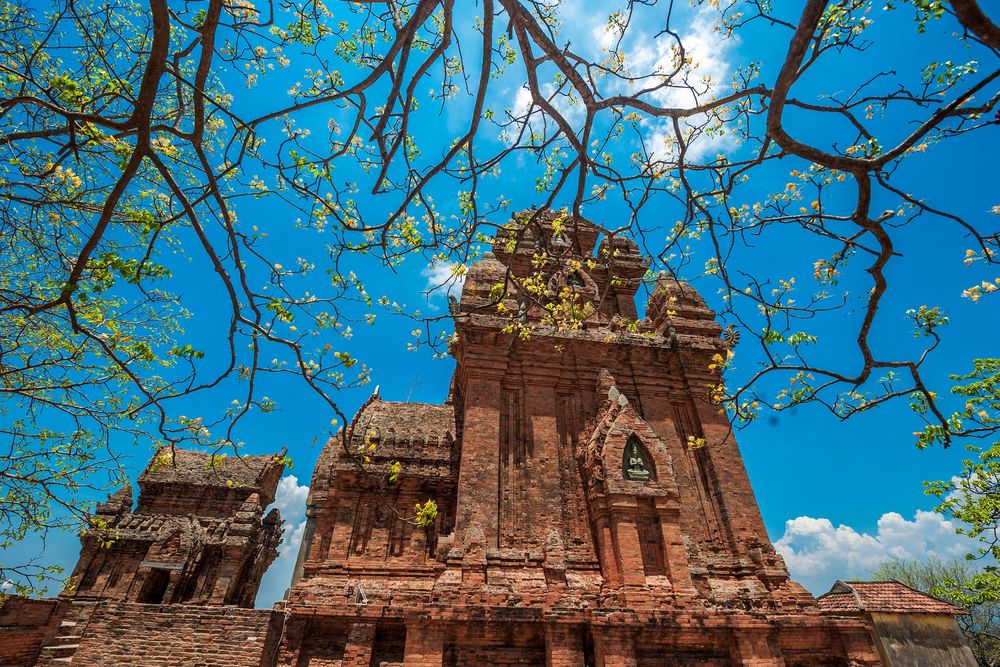
The 54 ethnic groups that make up Vietnam’s large national family possess a rich diversity of religious beliefs. While adhering to indigenous religions such as Cao Đài and Hòa Hảo, they also follow many foreign religions, including Buddhism, Catholicism, Protestantism, Taoism, Confucianism, and Islam. Among these imported religions, Islam can be said to be the least widespread in Vietnam. This is because the number of Muslims in Vietnam is small and largely concentrated in central Vietnam. A portion of the Cham people in Vietnam practice Islam; the Cham are the only ethnic group in Vietnam that follows Islam. This paper attempts to explore the spread and evolution of Islam in Vietnam from the perspective of the Cham people’s adoption of Islam.
Islam in Southeast Asia: The Historical Background of Islam’s Spread to Vietnam
Southeast Asia occupies maritime routes connecting China, India, Persia, the Arab world, and the Roman Empire; consequently, international trade has flourished there since ancient times.
Before Islam was introduced to Southeast Asia, local inhabitants, in addition to maintaining indigenous animistic religions, primarily practiced Buddhism and Hinduism. They were deeply influenced by Indian culture, so historians refer to this period as the “Indianized period.” In the Malay Archipelago, several Hindu and Buddhist kingdoms emerged in succession, the most prominent being Srivijaya (7th–13th centuries), established in southern Sumatra, and Majapahit (13th–16th centuries), established in eastern Java. At its height, Majapahit’s territory roughly equaled the combined area of present-day Indonesia and Malaysia.
Islam was first introduced to Southeast Asia between the 7th and 8th centuries. Beginning with the reign of the third Rashidun Caliph, Uthman, and continuing through the Umayyad and Abbasid periods, successive caliphates established trade relations with China. The Strait of Malacca became a passageway for merchant ships traveling between East and West. Ships frequently docked at ports along Sumatra and the Malay Peninsula to replenish food and fresh water while waiting for the monsoon winds. For commercial convenience, some Muslims later settled in these coastal ports, intermarried with local women, and built small mosques, gradually forming early Muslim communities. After the 8th century, large numbers of Muslim merchants settled along the northern coast of Sumatra, forming many commercial city-states and trade centers such as Perlak (864), Pasai (1042), Aceh (1065), and Tamiang (1184).
By the early 13th century, Islam had spread widely across the northwestern and northern coasts of Sumatra. In 1292, the Italian traveler Marco Polo, on his return journey from China, passed through Sumatra and observed that Perlak was a Muslim city (The Travels of Marco Polo, Fujian Science and Technology Press, 1981 edition, p. 208). The Muslim traveler Ibn Battuta, who traveled through Sumatra en route to China in 1345–1346, also recorded the flourishing state of Islam there.
With the development of commerce and the prosperity of coastal trading cities, larger Islamic states began to emerge. In Yingya Shenglan, Ma Huan described his observations in Sumatra during the Ming dynasty voyages of Zheng He. He noted that in places such as Palembang on the northeastern coast, Sumatra city in the west, and the Aceh region in the northwest, “both king and people were Huihui (Muslims).” This shows that from the 13th century onward, Islam had firmly established dominance in northwestern Sumatra. Thereafter, through trade, intermarriage, migration, and missionary activity, Islam gradually spread to central and southern regions, eventually becoming the major religion in these areas.
From the 14th century onward, Islam spread widely throughout the Malay Peninsula. Soon the maritime power of Malacca rose, controlling trade through the Strait of Malacca. By the mid-15th century, the Malacca Sultanate had conquered territories on both sides of the strait, and by 1480 it controlled all densely populated areas of southern Malaya and the coastal regions of Sumatra. The former Buddhist and Hindu ruling elites of Malacca, recognizing Islam’s growing influence, converted in large numbers. King Parameswara (r. 1390–1413) was among them; after converting, he adopted the name Iskandar Shah. His conversion led many subjects to follow suit, and his successors were all Muslims. By this time, the Malay Peninsula was essentially Islamized.
Meanwhile, Islam also spread to Java. As early as the latter half of the 14th century, members of the Majapahit royal family and Javanese nobility had embraced Islam. Along the northern coast of Java, Islam had already begun to spread in the 13th century. It was first introduced by Muslim merchants, followed by ulama (religious scholars) and Sufi figures. Tradition holds that nine saints, including Malik Ibrahim (d. 1419), were instrumental in spreading Islam in Java; they are popularly known in Indonesian folklore as the “Nine Saints.” Islam initially spread rapidly in port towns and then inland, as Muslim power grew steadily and independent polities emerged. The coastal Muslim kingdom of Demak grew increasingly strong and in 1478, conquered a significant portion of the Buddhist Majapahit kingdom. By the end of the 15th century, Majapahit had declined into a minor state, and local governors who had converted to Islam declared independence. In 1575, Sutawijaya (d. 1601) unified the region and founded the Islamic Mataram Kingdom (1582–1755). The remnants of Majapahit were eventually eliminated. Mataram ruled eastern and central Java, and in 1639, it conquered Blambangan, the last Hindu stronghold in eastern Java. Earlier, the Islamic kingdom of Banten had overthrown the Hindu state of Pajajaran in western Java. By this time, Java was largely Islamized.
The Maluku Islands, known for their spices, had long-established trade relations with Java, Sumatra, the Malay Peninsula, and India. Around 1440, Javanese and Malay Muslim merchants introduced Islam to the Maluku Islands, where several small Islamic kingdoms were subsequently established. The spread of Islam to the northwest coast of Kalimantan was mainly due to merchants from Malacca. After Malacca fell to the Portuguese in 1511, many merchants migrated to Kalimantan. As Muslim influence grew, the Brunei Sultanate was established. In 1550, a group of ulama from Palembang introduced Islam to the Sukadana kingdom in western Kalimantan, which had previously followed Hinduism. Forty years later, the second king converted to Islam, and the number of believers increased. In 1725, the kingdom was occupied by the Dutch.
Islam reached Sulawesi somewhat later. In 1540, Portuguese colonizers occupied the island. Islam spread there from the surrounding islands, and Islamic states such as Makassar and Bugis were established.
From the above, it can be seen that Southeast Asia was originally a region dominated by Buddhism, Hinduism, and indigenous religions. Through the efforts of Muslim merchants and ulama, the region gradually became largely Islamized. After the 16th century, Western colonial powers invaded, and the region successively became colonized. Western Christian missionaries, supported by military and economic power, actively spread Christianity and Western culture, engaging in cultural colonization. Muslims in the region waged long struggles against foreign domination and eventually achieved independence after World War II, establishing independent Islamic-majority states such as Malaysia and the Republic of Indonesia.
As a member of Southeast Asia, how did Vietnam receive Islam? The following section provides a brief introduction.
2. The Vietnamese Cham and the spread of Islam among the Cham
The Cham in Vietnam are an ethnic group with a long history and a brilliant cultural tradition. As early as the 2nd century CE, they established the kingdom of Linyi in central Vietnam, later known as “Champa” or “Cham City.” They were once highly prosperous and developed a distinctive Cham cultural tradition. The Cham belong to the South Asian branch of the Mongoloid racial category, and their language and script are part of the Austronesian language family. The Cham’s major religions are Brahmanism (Hinduism) and Islam. The modern distribution, religious beliefs, and culture of the Cham in Vietnam are closely connected to the historical Cham kingdom of Champa.
The Cham population in Vietnam, including Cham Muslims, is about 178.948, ranking 15th among Vietnam’s 54 ethnic groups (2019). They are mainly distributed across provinces and cities in the south-central, southeastern, and southwestern regions of Vietnam. The most concentrated Cham settlements are in Bình Thuận Province and Ninh Thuận Province. The Cham follow three different religions: (1) Brahmanism (mainly in central Vietnam); (2) the Bani religion, also called “Old Islam” (also in central Vietnam); and (3) Islam, also called “New Islam” (mainly in southern Vietnam). According to statistics from Vietnam’s Religious Affairs Committee, by the end of 2019, the number of Cham who practiced Islam was about 80,000 to 90,000. Among Vietnam’s six recognized religions, Islam ranked sixth in number of adherents.
There is no fixed consensus on the exact period when Islam entered Vietnam, but it is generally believed that Islam arrived quite early. The Annamite Range along the Vietnam–Laos border divides mainland Southeast Asia into two cultural spheres: the northeast (including north-central and northern Vietnam) was influenced by Chinese culture, while the southwest (including the Cham areas of south-central Vietnam) was influenced by Indian culture. In early times, the Cham practiced Brahmanism, which at one point became the state religion of the Champa kingdom. Islam emerged on the Arabian Peninsula in the 7th century and gradually spread to India. The expansion of trade enabled Arab and Indian merchants to bring Islam to Malay and Javanese peoples. Two Islamic dynasties later emerged on the Malay Peninsula, and Islam subsequently spread to other parts of Southeast Asia. In central Vietnam (Cham areas), ceramic shards produced in Iran and West Asia dated to before the 10th century have been excavated, indicating that Champa had trade relations with Arab merchants at an early time. In addition, according to some historical materials, in the 14th century a Champa princess reportedly communicated in Turkish with the Moroccan traveler Ibn Battuta and could also write Arabic proficiently. Based on such evidence, some researchers believe that Islam already had a significant influence in Champa during the 13th–14th centuries.
Many scholars consider the 13th century to be the period when Islam entered Champa. In the early stage, Islam was not widely accepted among the Cham, since Brahmanism was then the orthodox religion. By the 15th century, as the Champa kingdom moved toward collapse, Brahmanism gradually weakened. By the mid-17th century, Islam began to be accepted by a substantial portion of the Cham. During the decline and disintegration of Champa, some Cham migrated south and southwest, settling in what is now southern Vietnam, Cambodia, and Malaysia. Because the Cham and Malays belong to the Austronesian language family, communication between them was relatively easy. Elderly Cham who migrated to southern Vietnam and Cambodia say their ancestors originally practiced Brahmanism, but because they frequently came into contact with Islam-practicing Malays—and because Malay merchants often did business in southern Vietnam and Cambodia—the Cham in southern Vietnam and Cambodia gradually adopted Islam. In the mid-19th century, large numbers of Cham returned from Cambodia to settle in southern Vietnam, increasing the number of Islam-practicing Cham in the south. They practiced orthodox Islam and maintained frequent contact with the wider Islamic world through Cambodia and Malaysia. In the early 20th century, the Cham in southern Vietnam were strongly influenced by Malays; in Islamic schools, books on Islamic doctrine were written in Malay. Before 1975, southern Vietnamese Cham maintained close ties with Malaysian Muslims. Locally, Cham Muslims’ connections with overseas Islamic organizations were closer than their ties with Cham communities in central Vietnam. In southern Vietnam, some people of mixed Malay and Khmer ancestry live together with the Cham and share the Islamic faith.
3. The economic life of Vietnamese Cham Muslims
Vietnam is a multi-ethnic country, and managing ethnic relations and ethnic issues is one of the Vietnamese government’s priorities. The government has consistently treated minority economic development as a key task. The Cham—especially Cham Muslims—maintain relatively close ties with overseas Islamic organizations, so ensuring their right to freedom of belief has long been a concern of the Vietnamese government. On May 12, 1982, Directive No. 121 on Cham affairs was issued, mentioning the need to properly resolve disputes over mosque land. Since Vietnam launched its renovation and opening-up policy in 1986, the economy in the Cham regions has developed relatively quickly over the past two decades.
In central Vietnam, the Cham mainly practice the Bani religion (“Old Islam”), though some also practice Islam (“New Islam”). They mostly live in plains and hilly areas. Their traditional livelihoods center on wet-rice cultivation, as well as growing staple crops such as sweet potatoes, sesame, mung beans, and millet. In addition, they have traditional handicrafts such as pottery and weaving. Today, Cham communities in central Vietnam, adapting to local conditions, have shifted from rice cultivation to cash crops such as grapes and coffee, and have developed animal husbandry—raising sheep and cattle—along with handicrafts such as woodworking and gold and silver ornament making.
In southern Vietnam, Cham Muslims’ livelihoods have primarily involved trade, fishing, and hand weaving (a traditional southern Cham craft), and more recently, they have expanded into farming and animal husbandry. Because An Giang Province borders Cambodia, before Vietnam’s reunification in 1975, about 70% of Cham Muslims in An Giang engaged in cross-border trade between Vietnam and Cambodia. They mainly dealt in towels, fabrics, clothing, plastic shoes, medicinal herbs, and traditional medicines. Due to intense market competition and, in recent years, support from the Vietnamese government and social organizations, fewer and fewer Cham Muslims now engage in trade; many have gradually shifted toward agriculture and animal husbandry. Fishing and silk weaving are traditional crafts among southern Cham Muslims, and their silk products are widely appreciated. Today, only a small number of Cham households still retain this traditional hand-weaving technique. Most products are for household use, with small quantities exported to some Southeast Asian countries.
4. The religious life of Vietnamese Cham Muslims
Religious practice
From the above, Vietnamese Cham Muslims can be divided into two groups: (1) Cham in central Vietnam who practice the Bani religion; and (2) Cham in southern Vietnam who practice Islam. Because Bani and Islam share common origins, their basic doctrines and customs are similar. However, the religious lives of Bani Cham in the central region and Muslim Cham in the southern region differ considerably. Central Bani Cham have relatively limited contact with international Islam and with southern Vietnamese Cham Muslims.
Bani is the product of an early form of Islam combined with Cham folk beliefs. Vietnamese scholars believe that Bani is a form of Islam with strong local characteristics. As noted above, before Islam entered Cham areas, the Cham practiced Brahmanism, and Brahmanism differs greatly from Islam in doctrine and teachings. Thus, after Islam arrived in the central Cham region, many of its original customs and rituals were gradually diluted among the local Cham. Bani Cham do not strictly observe orthodox Islamic rules and doctrines. They may drink alcohol and have limited knowledge of the Qur’an and Islamic rituals and taboos. Bani Cham avoid pork, pray toward Mecca, and practice Arabic-style calligraphy—yet no one can actually read Arabic. To this day, Cham in central Vietnam preserve a matrilineal family system: cross-cousin marriage is prohibited; women hold the initiative in marriage; after the wedding, men move into the wife’s home; children take the mother’s surname; only women can inherit parents’ property, with the youngest daughter receiving the largest share. When Islam entered the Bani Cham region, it faced a major challenge—matrilineal social organization. Therefore, as Islam blended with local customs, it naturally lost some of its original distinctiveness. While believing in Allah and the Prophet Muhammad, Bani Cham also venerate Cham goddesses, national heroes, and ancestors. Most Bani Cham are unfamiliar with Islamic scriptures, do not recite formal supplications, and do not observe the Friday congregational prayer. They also do not celebrate Eid al-Fitr, but instead observe their own distinctive festival, Ramuwan.
In contrast, Cham Muslims in southern Vietnam are Sunni and devout. They are relatively moderate and strictly observe Islamic doctrines and teachings. They use Arabic and Malay in religious life. Both men and women among the Muslim Cham have coming-of-age rites. Boys undergo circumcision at around age 15, officiated by an imam; today, circumcision is largely symbolic. Girls, at ages 13–14, perform a bathing ritual at the village well, then go to the mosque where the imam sprinkles holy water on their heads, cuts a lock of hair from each girl, recites scripture, and the girls kneel and bow three times, completing the rite of passage. The most important festivals for southern Cham Muslims are Eid al-Fitr and Eid al-Adha. During Eid al-Adha, southern Cham Muslims hold nighttime Qur’an recitation competitions. The Mubarak Mosque, about 2 km from Châu Đốc (the capital of An Giang Province), is a representative mosque for the southern Cham. It has a distinctive architectural style, and activities are organized there each year for Eid al-Adha, Eid al-Fitr, and the Prophet’s Birthday.
Thus, although both communities are Cham, differences in region and historical background produce major differences in religious life between central Bani Cham and southern Muslim Cham. Clearly, southern Cham Muslims adhere to orthodox Islam much more strictly than central “Old Islam” Cham. In addition, it is worth noting that because the central Bani Cham retain remnants of a matrilineal system, while southern Cham communities have been strongly influenced by Islamic patriarchal ideas, women’s status and roles in society and the family are completely opposite across these two groups. If, among Bani Cham, men and women are socially equal and women are encouraged to participate in social work such as healthcare and education—often holding an advantageous position compared to men—then among southern Muslim Cham, women face strong constraints in social and family relations as well as in religious practice.
Religious sites
Vietnam has 17 Bani temples, distributed across Ninh Thuận and Bình Thuận provinces (central Vietnam). These temples are relatively simply built, with local characteristics in their outward appearance and interior layout. Bani temples are places where believers conduct religious life. The sacred object enshrined in the temple is a holy tree, and the large drum in the temple is the only musical instrument used during festival performances.
Cham mosques in Vietnam have external forms and internal layouts consistent with mosques elsewhere in the world. They fall into two general types: mosques and small prayer houses (surau). Mosques are built along an east–west orientation so that worshippers can face Mecca during prayer. Each village has a mosque, and each mosque has a management committee headed by an ahong (religious leader). The mosque is a place for Islamic activities and also a venue for meetings to discuss major village matters. By the end of 2003, Vietnam had 41 mosques and 19 surau.
Religious personnel
Bani religious specialists have a significant influence on Bani Cham society and everyday life. Bani does not encourage celibacy; religious personnel are often people highly knowledgeable about agriculture and rich in practical experience. They do not eat pork or drink alcohol, and the livestock and poultry they consume are slaughtered by themselves. Because Bani religious personnel are valued by local government and communities, they participate in believers’ religious activities, weddings, and funerals. Funerals in Bani Cham households are usually officiated by Bani religious personnel, and the number of officiants is clearly specified depending on whether the deceased is a child or an adult. If the deceased is a child or died in a disaster, only one religious person officiates; if the deceased is under 70, three officiants; if over 80, six officiants. If the deceased is a religious specialist or a wealthy person, 13 officiants conduct the rites. The Bani Qur’an is a marked Arabic handwritten manuscript to aid reading, with annotations in Cham script.
Each mosque among the Muslim Cham has a management committee. Among Islamic religious personnel, the head is the religious leader, who is well-versed in doctrine and teachings, has a stable family life, and good conduct. Assisting him is a deputy leader, responsible for handling matters in the leader’s absence; the leader has an assistant who handles social affairs; the imam guides believers during rituals; a Qur’an master teaches doctrine during Friday services; and a mullah teaches religious principles to believers. In recent years, many religious leaders have actively participated in charity work. Many Cham Islamic religious personnel have relatives abroad and receive annual support from overseas to help build mosques; many have also received support to undertake the pilgrimage to Mecca.
Religious organizations
In 1988, the Ho Chi Minh City government approved the local Muslim community’s establishment of a “Financial Management Committee,” with one chair and two vice-chairs; it was later renamed the “Provisional Representative Committee of Ho Chi Minh City Muslims.” In 1992, the Ho Chi Minh City People’s Committee issued a decision approving the establishment of the “Representative Committee of Ho Chi Minh City Muslims.” The committee’s term is five years, and it has nine members; it also includes an advisory council, an office, and 14 regional management committees. Because it has high prestige, many overseas organizations and individuals, as well as foreign embassies and consulates, regard the Ho Chi Minh City Muslim Representative Committee as a common representative body for Muslims in Vietnam, and financial aid from international Islamic organizations is channeled through this committee.
5. Conclusion
The diffusion school in anthropology argues that in the process of sustaining life, people “cannot exist in isolation”: every person participates in cultural transmission at every moment of life, and culture is not only transmitted but also selectively absorbed and transformed. In other words, whenever an ethnic group accepts a cultural transmission and is deeply influenced by it, it also expresses agency as an active subject. Since Islam entered the social and spiritual life of the Vietnamese Cham, it has exerted strong and profound influence. At the same time, however, the Cham’s traditional culture and customs have been preserved. Islam has left deep traces within Cham culture, and as the only one of Vietnam’s 54 ethnic groups to practice Islam, the Cham have also expressed their ethnic culture richly through Islamic culture. The Bani Cham and Muslim Cham share both similarities and differences, giving Vietnamese Islam a diversified character. In the course of development, Vietnamese Islam maintains regular contact with Islamic communities in Southeast Asia and around the world. As a component of global Islam, Vietnamese Islam—because of its distinct characteristics—will surely make Islamic culture worldwide even more diverse and colorful.
Main references
Fan Honggui (ed.), Vietnam’s Ethnic Groups and Ethnic Issues, Guangxi Nationalities Press, 1999.
Đặng Nghiêm Vạn, Vietnam’s Ethno-National Community, Ho Chi Minh City National University Press, 2003.
Teng Chengda, “Contemporary Vietnamese Cham and Islam,” Journal of the Northwest Second Institute for Nationalities, 2005.