Vietnam and the Chinese Model: A Comparative Study of Vietnamese and Chinese Government in the First Half of the Nineteenth Century
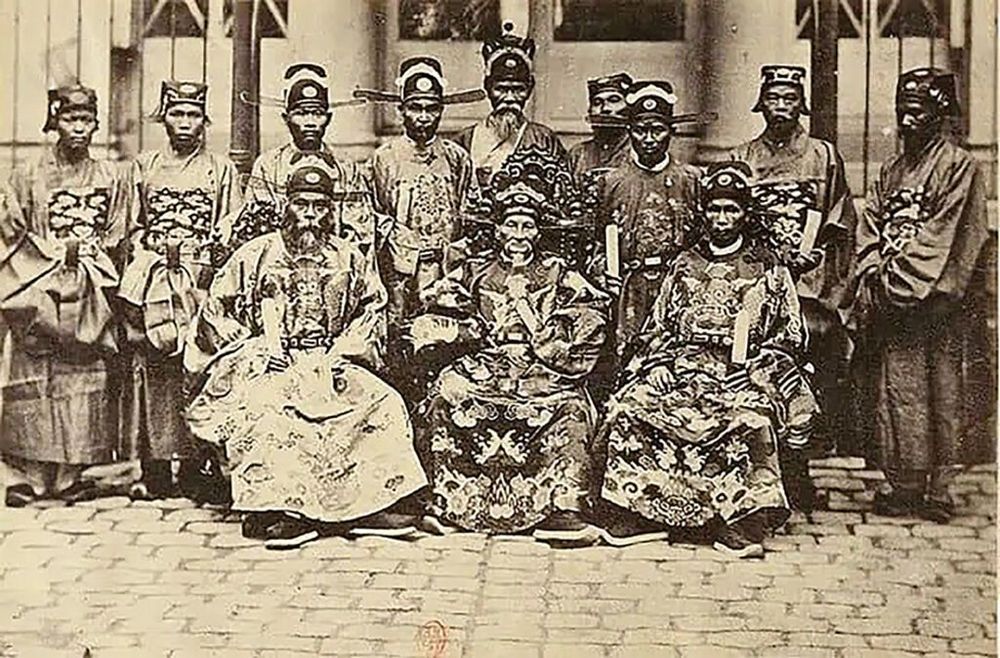
For readers interested in Vietnamese history, Chinese cultural influence, and the development of political institutions in East and Southeast Asia, Vietnam and the Chinese Model offers an insightful examination of how Vietnam adopted, adapted, and transformed Chinese systems of governance. Focusing on the Nguyễn dynasty during the first half of the nineteenth century, the book helps readers understand how Vietnam developed its own administrative and intellectual traditions while participating in a broader East Asian cultural world. It is particularly valuable for students and researchers exploring the relationship between cultural exchange, state formation, and Vietnamese historical identity.
Written by historian Alexander Barton Woodside and published by Harvard University Press in 1971 as part of the Harvard East Asian Monographs series, Vietnam and the Chinese Model: A Comparative Study of Vietnamese and Chinese Government in the First Half of the Nineteenth Century is a landmark work in the comparative history of Vietnam and China. The book examines the political and administrative institutions of nineteenth-century Vietnam under the Nguyễn dynasty, particularly during the reign of Emperor Minh Mạng (1820–1841), in comparison with those of Qing China.
Rather than portraying Vietnamese political culture as a straightforward imitation of its powerful northern neighbor, Woodside investigates the complex processes of institutional borrowing, adaptation, and resistance. His comparative approach reveals how Vietnamese rulers selectively incorporated elements of Chinese statecraft while reshaping them to address the challenges of governing a geographically extensive, culturally diverse kingdom.
The book explores several interconnected dimensions of this relationship. It begins by reconsidering the historical and cultural foundations of Sino-Vietnamese relations, questioning simplistic interpretations of Chinese cultural influence. It then compares the central administrative structures of the Nguyễn and Qing governments, examining bureaucratic organization, political authority, and communication between the imperial court and provincial administrations.
Particular attention is given to the tensions between the ideals of centralized Confucian governance and the practical realities of administering Vietnamese society. Woodside examines the distance between court officials and local communities, as well as the difficulties of implementing institutional models across regions with different historical experiences and social traditions.
Education and civil service examinations constitute another major focus. By analyzing Vietnam's adaptation of the Chinese examination tradition, Woodside illuminates the relationship between classical learning, elite recruitment, political legitimacy, and the reproduction of bureaucratic authority. The examination system emerges not simply as an imported institution but as a central component of Vietnamese political and intellectual life, shaped by local circumstances and historical developments.
The study also situates Vietnam within a broader regional and international context. Vietnamese engagement with Chinese political models influenced the Nguyễn court's understanding of its relationships with neighboring Southeast Asian societies, including Cambodia, Laos, and Siam. At the same time, the nineteenth century brought new challenges as European expansion increasingly confronted established regional political and diplomatic traditions.
One of the book's most significant contributions is its treatment of Vietnam as an active participant in the making of its own political institutions. By comparing Vietnamese and Chinese systems institution by institution, Woodside moves beyond a simple opposition between Chinese influence and Vietnamese independence. Instead, he demonstrates the importance of examining how political ideas and administrative practices change when they move between societies.
More than five decades after its original publication, Vietnam and the Chinese Model remains an important reference for scholars and students of Vietnamese history, East Asian political institutions, comparative state formation, and cross-cultural exchange. Its central questions continue to resonate with contemporary scholarship: How do societies adapt external intellectual and institutional traditions? How do political models acquire new meanings in different historical environments? And how can a society participate in a shared cultural world while maintaining its own political and historical identity?
Through its comparative perspective, Woodside's study invites readers to understand nineteenth-century Vietnam not merely as a peripheral recipient of Chinese civilization, but as a historical society whose institutions emerged through continuous negotiation between inherited traditions, indigenous political priorities, and the changing realities of East and Southeast Asia.
Image: Mandarins of the Nguyen Dynasty