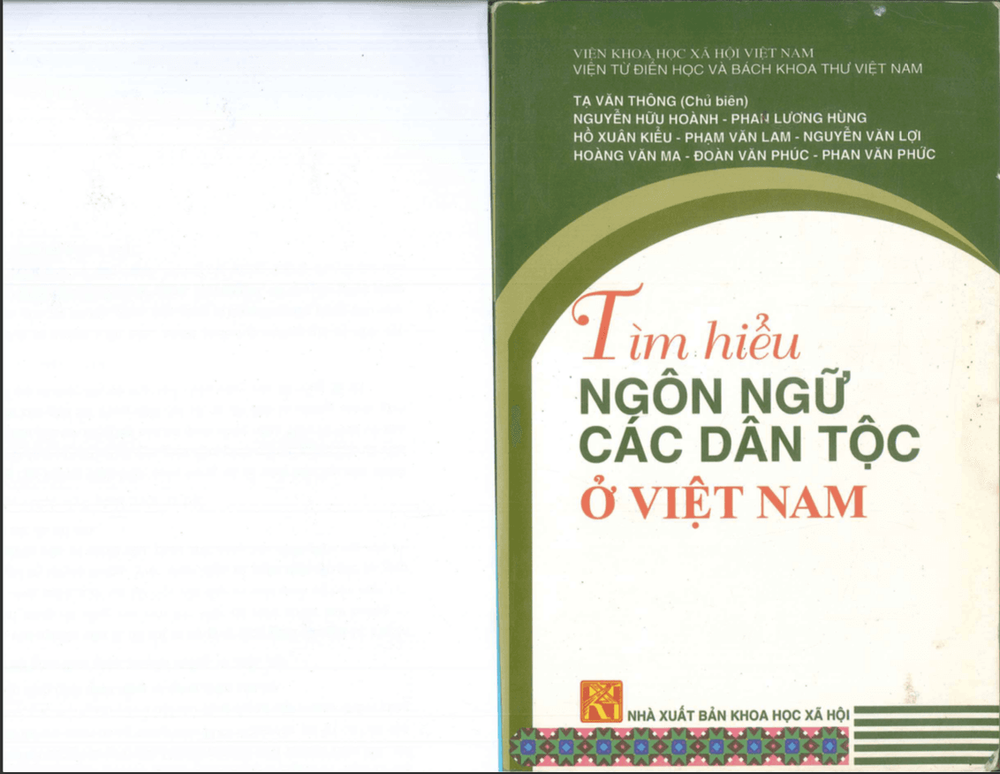
The study of minority languages can provide linguists with extremely valuable materials for understanding and developing linguistic theories and research methods, exploring the history and developmental rules of the Vietnamese language and the languages of other ethnic groups, and contributing to solving linguistic issues arising from real-life needs. The study of the languages of Vietnam's ethnic nationalities by the Vietnam Institute of Linguistics has always followed these objectives, resulting in numerous fundamental and applied research projects, as well as many linguistic studies. The essay collection "Exploring the Languages of Vietnam's Ethnic Nationalities", published in 2009, is part of these research outcomes. The book consists of articles primarily derived from institute-level research conducted between 2000 and 2009, overseen by the Department of Minority Language Studies at the Vietnam Institute of Linguistics. The essays focus on the following topics:(1) Phonetics – Dialects – Writing Systems; (2) Historical-Comparative Studies; (3) Grammar; (4) Language and Society.
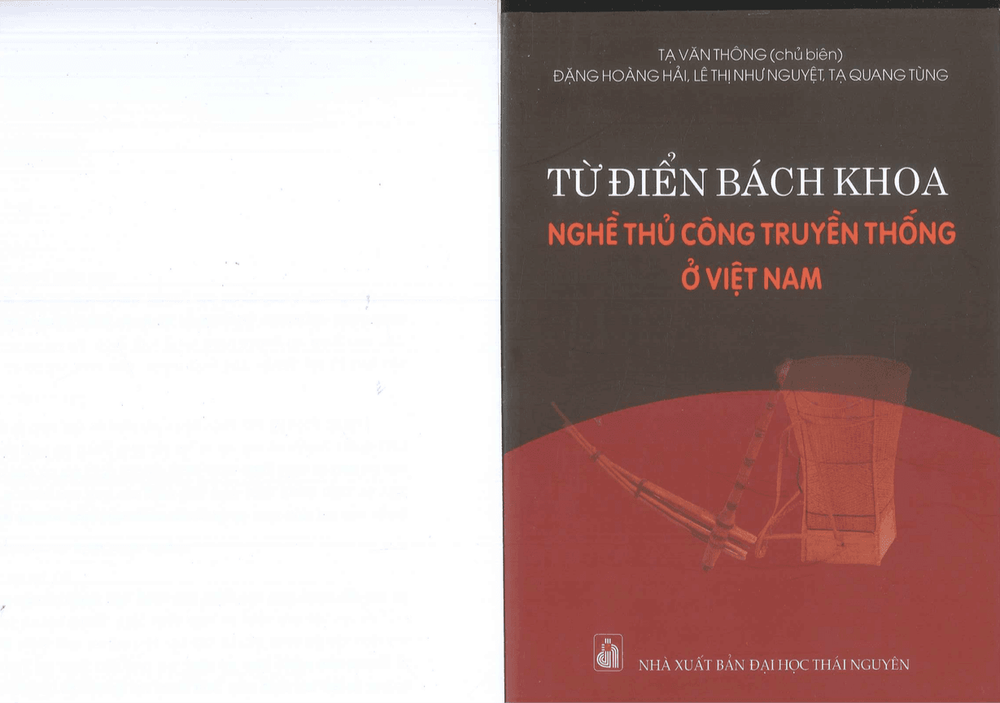
This book introduces traditional handicrafts (also known as ancient crafts) in Vietnam. These crafts tell us stories from the past that have been passed down to the present day.

This book examines the languages of Vietnam’s 54 ethnic nationalities within the context of its multi-ethnic and multilingual landscape. It is structured into two main sections: The first section analyzes the linguistic characteristics of Vietnam’s ethnic nationalities, while the second provides an encyclopedic overview of their languages.

The primary task of this monograph is to summarize and evaluate previous research findings on various aspects of Kơ Ho phonetics, revisiting unresolved and inadequately addressed issues. However, the main objective of this book is to provide a comprehensive and in-depth description of the current state of Kơ Ho phonetics—something that no previous work has accomplished. This includes the characteristics of speech sounds, syllables, and the phonological unit that the author refers to as the “phonetic mold.” It also examines phonetic variations by comparing Kơ Ho dialects, the complex and diverse nature of natural phonetic features, and the identification of essential distinctive features that serve as markers of linguistic signs in the Kơ Ho language.

The Kháng people are a community residing in the Northwest region of Vietnam, primarily along both sides of the Đà River. Due to their small population and relatively scattered settlement, often interspersed with other ethnic nationalities, the Kháng language is used only within families and villages, mostly by older generations. Without formal instruction or the development of a written literary tradition, the Kháng mother tongue is at high risk of extinction. This book presents the results of a study on the phonetics of the Kháng language and proposes a writing system for the Kháng people in Vietnam.

This work focuses on “grammar” in a broad sense, offering a comprehensive description of the Hmong language from multiple perspectives. To provide readers with a more complete understanding of the Hmong language, the book goes beyond grammatical knowledge (covering words, phrases, and sentences) to include sections on the history of the Hmong people and their language, their linguistic origins, typological characteristics, phonetics and writing system, dialectal variations, and the origins of lexical layers in the Hmong language. The book also provides a relatively comprehensive bibliography of studies on the Hmong language conducted in Vietnam and globally up to recent times.

With his monograph “Phonetics of the Mường Language across Dialects”, Dr. Nguyễn Văn Tài was the first scholar to conduct a comprehensive survey and description of Mường phonetics across its dialects, from which he divided them into three regions: Northern (Sơn La, Hà Giang, Tuyên Quang, Lào Cai, Yên Bái), Central (Hòa Bình and its surrounding areas), and Southern (Nghệ An, Hà Tĩnh, Quảng Bình). The 350-page work is accompanied by three appendices: a comparative study of Việt–Mường phonology, a lexical comparison of nearly 1,000 words across 30 sub-dialects, and 34 maps of dialectal phenomena. “Phonetics of the Mường Language across Dialects” is a work of both theoretical and practical significance, invaluable for research on the Mường language and the history of Vietnamese, and it rightfully deserves a place in the linguistic bookshelf.

In 1835, Qing scholar Cai Tinglan (蔡廷蘭, 1801–1859) was traveling from Fujian back to his home in the Penghu Islands when his vessel was caught in a violent typhoon. Blown far off course, the ship drifted at sea for more than a week before reaching the coast of central Vietnam. What began as an unexpected maritime disaster turned into a months-long journey through Vietnam during the reign of Emperor Minh Mạng. Cai recorded his experiences in 《海南雜著》 (Hainan zazhu, Vietnamese: Hải Nam Tạp Trứ), first published in 1837. From clothing, food, religious practices, and marketplaces to roads, geography, and the workings of government, the book offers a rare glimpse of Vietnamese life in the 1830s through the eyes of a Chinese scholar. Particularly fascinating is the role of writing as a means of crossing linguistic boundaries. Although Cai could not speak Vietnamese, he was able to communicate with Nguyễn officials in literary Chinese through written conversations known as “brush talks” (bút đàm). His literacy transformed him, in the eyes of Vietnamese officials, from a suspicious foreign castaway into a recognized scholar with whom they could exchange poetry and writings—and whom they would assist on his journey home. The work also reveals a Vietnam deeply connected to the maritime worlds of East and Southeast Asia, where networks of merchants, migrants from Fujian and Guangdong, officials, scholars, texts, and commodities regularly moved across what we now regard as national and political boundaries. Nearly two centuries later, Hải Nam Tạp Trứ received its first English translation as Miscellany of the South Seas: A Chinese Scholar’s Chronicle of Shipwreck and Travel through 1830s Vietnam, translated and introduced by Kathlene Baldanza and Zhao Lu and published by the University of Washington Press in 2023. Notably, the translation is based primarily on a handwritten copy now preserved at the Institute of Hán-Nôm Studies in Hanoi, under the shelf mark HVv.80. From a shipwreck in 1835, to a book published in 1837, to a text transmitted across multiple languages and now accessible online around the world, the journey of Hải Nam Tạp Trứ is nearly as remarkable as that of its author.

This appendix presents a comparative vocabulary dataset of nearly 1,000 lexical items drawn from 30 Mường dialects compiled by Dr. Nguyễn Văn Tài.

This dataset outlines the reconstruction of Vietnamese–Mường phonological systems. To demonstrate their structure and function, Dr. Nguyễn Văn Tài compiles a comparative list of one hundred lexical items. These entries represent sounds previously analyzed and are read across Mường (Bi dialect) and Vietnamese (Nghệ Tĩnh and Hanoi dialects), highlighting systematic correspondences.

This volume surveys ethnological work in North Vietnam and presents focused case studies of two upland peoples—the Muong and the Thai.

This volume gathers ethnographical notes on minority communities living mainly in the northwestern and western regions of Vietnam. It focuses on the Meo (Hmong), Khmu, Coong (Cong), Sila (Si La), Co Sung / La Hu (Lahu), Bo Kho Pa (rarely documented group; historical designation), and U Ni / Ha Nhi (Hà Nhì).
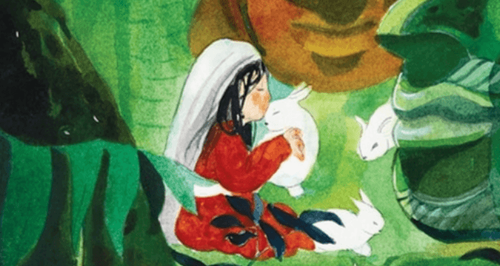
This collection brings together 58 stories from the rich oral and literary traditions of the Cham people. 32 tales were selected from materials held by the Centre and shared by individuals and families in Cham villages in Ninh Thuận and Bình Thuận. 26 tales were collected by Tuấn Dũng from books and magazines. Stories about Po Nai and Po Ri Yak sit alongside tales rooted in Cham customs and spiritual life. Together, they offer insights into how Cham communities have told stories about love, work, justice, and courage.

Through the collection of Kơ Ho folktales, we can gain insight into the richness and diversity of successive cultural layers that have interacted, blended, and enriched one another throughout the long history of ethnic communities in Lâm Đồng and the Central Highlands. These cultural layers range from the swidden agriculture traditions of the highland regions to the wet rice cultivation culture and the coastal cultural influences. In addition to the indigenous cultural foundations created by the ancestors of these ethnic minority peoples, history has also witnessed the exchange and integration of new cultural elements introduced by the Chăm and Vietnamese people. The treasury of Kơ Ho folktales and their cultural heritage as a whole serve as a testament to this dynamic cultural evolution.
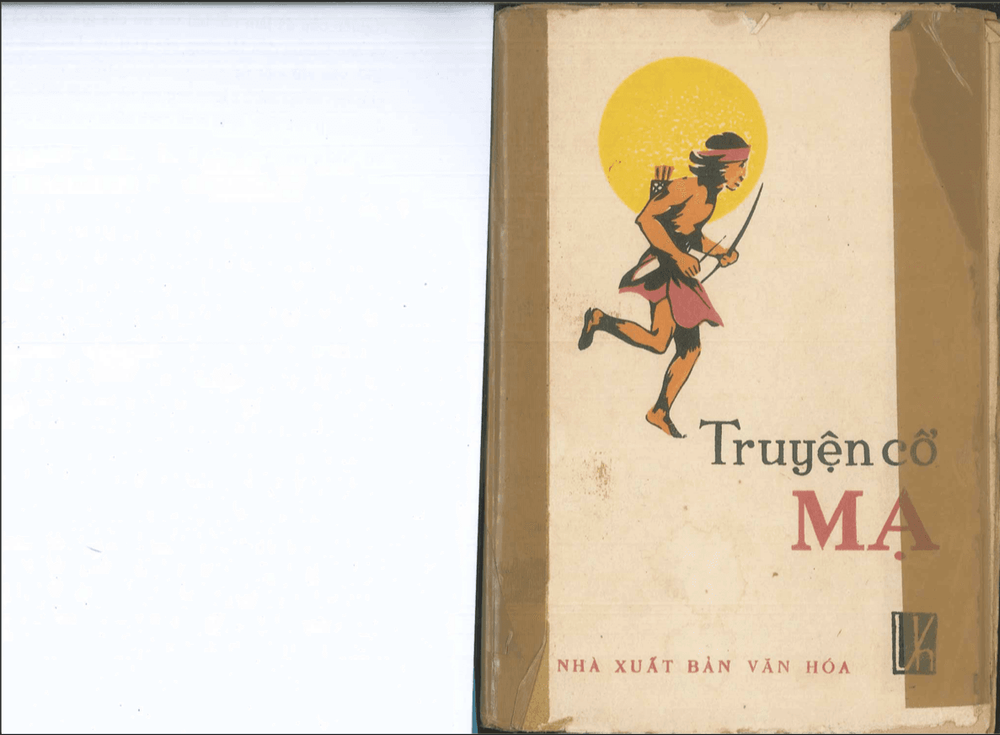
The Mạ people are a member of the great national family of Vietnam and have long inhabited the majestic Central Highlands. They possess a rich folk literature and arts heritage, distinctly reflecting their unique cultural identity. The collection and publication of Mạ folktales play a crucial role in allowing the Mạ people to express their voice while also helping other ethnic nationalities understand their character and spirit. This book by author Tạ Văn Thông is therefore of great significance in preserving the folk cultural traditions of the Mạ people in particular and Vietnam’s ethnic minorities in general.
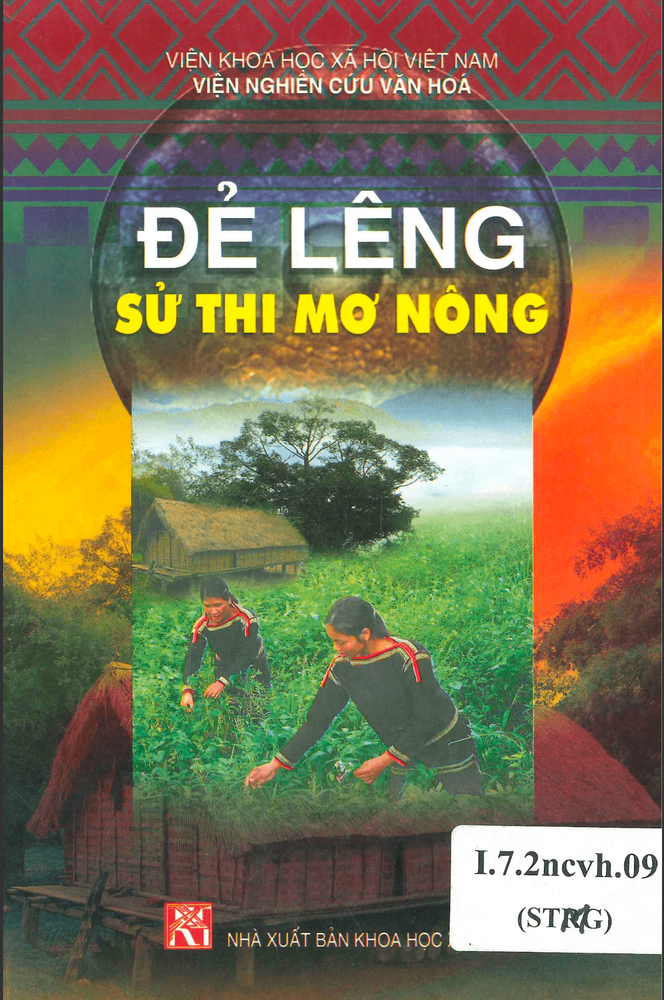
Đẻ Lêng is a traditional epic of the Mơ Nông people of Vietnam's Central Highlands, recounting the extraordinary life and adventures of Lêng, a hero endowed with supernatural powers. Born under unusual circumstances, separated from his birth mother, and raised in a world where humans and divine beings interact, Lêng undergoes numerous trials, fierce battles, and a journey to discover his origins. The narrative weaves together themes of maternal love, reunion, romance, courage, and conflicts between communities. Through fantastic imagery, mythic battles, and rhythmic storytelling, the epic offers insights into Mơ Nông cosmology, spiritual beliefs, and social life. Originally performed by the storyteller Điểu Mpioih, the epic was collected by Đỗ Hồng Kỳ and Lê Ngọc Phúc, and transcribed and translated into Vietnamese by Điểu Kâu. The complete version was published in 2006, followed by an abridged edition in 2009, contributing to the preservation and wider appreciation of Mơ Nông oral epic heritage.
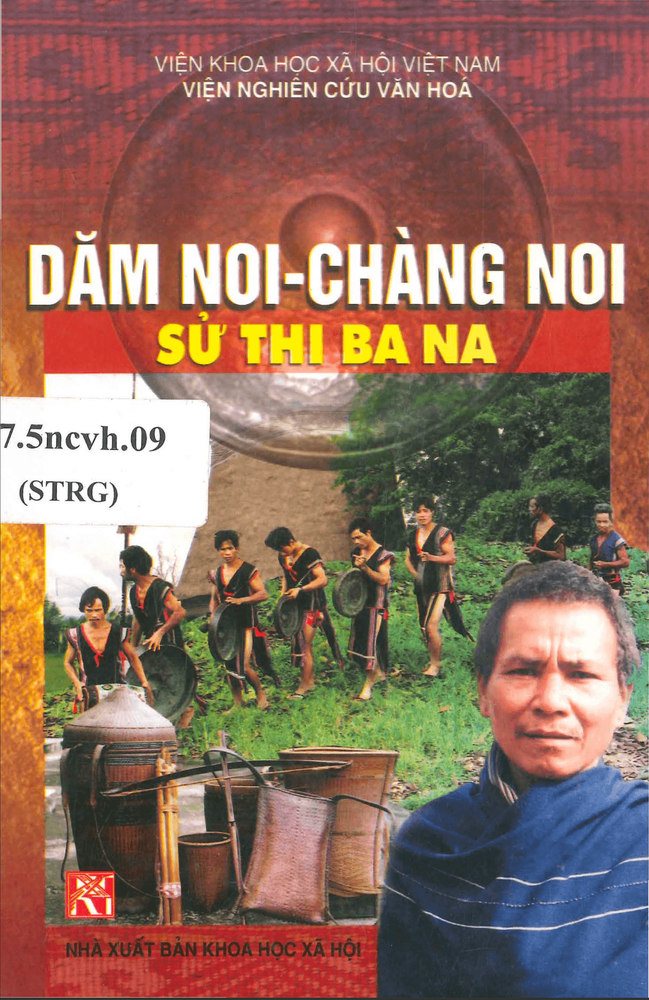
Dăm Noi – Chàng Noi (The Epic of Noi) is a traditional epic of the Ba Na people of Vietnam's Central Highlands, recounting the heroic deeds and extraordinary adventures of Noi and his four brothers, Yung, Yol, Dơhrít, and Hmeng. The sons of Dăm Set and Rak, the five brothers possess supernatural strength and embark on a quest to avenge their ancestors and villagers, who had been killed by the cruel Pơdrang Hơ – Pơdrang Hơm. Along their journey, they confront supernatural forces, overcome formidable challenges, acquire magical treasures, and achieve remarkable victories. Beyond its heroic battles, the epic vividly portrays Ba Na village life, rituals honoring spiritual beings, communal celebrations, marriage customs, and family relationships. The narrative was originally performed by the storyteller Bok Angep, collected by Nguyễn Quang Tuệ, and transcribed and translated into Vietnamese by Siu Pết. The complete text was published in 2006, followed by an abridged edition in 2009 to make this oral epic heritage more accessible to local communities and new generations of readers.
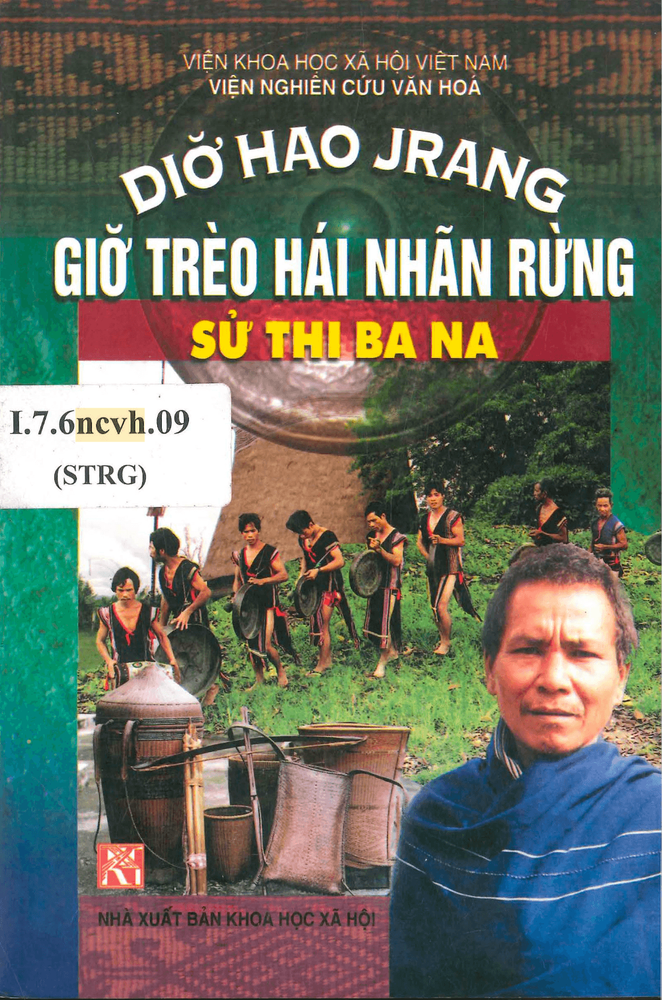
Diơ hao jrang – Giơ trèo hái nhãn rừng (Giơ Climbs to Gather Wild Longans) is a traditional epic of the Ba Na people of Vietnam's Central Highlands. The narrative centers on a journey into the forest to gather wild longans, which develops into a series of confrontations between heroic figures and powerful adversaries. What begins as a seemingly simple effort to collect forest fruit for villagers unfolds into an expansive world of adventures, supernatural battles, and trials of courage, ingenuity, and solidarity. Central to the story are the heroes Giơ Tu Krong, Giơ Hreng, and Pham, who confront Bok Kiek La Dia Kla Kong in a dispute involving a wild longan tree. Beyond celebrating heroic strength and character, the epic reflects Ba Na understandings of nature, access to forest resources, and communal life. Originally performed by the storyteller Bok Ponh, the epic was collected by Nguyễn Quang Tuệ, and transcribed and translated into Vietnamese by Siu Pết. The complete version was published in 2006, followed by an abridged edition in 2009. Both publications serve as valuable resources for preserving, studying, and transmitting the Ba Na epic tradition.