Introducing the Ethnology and Ethnolinguistics Collection
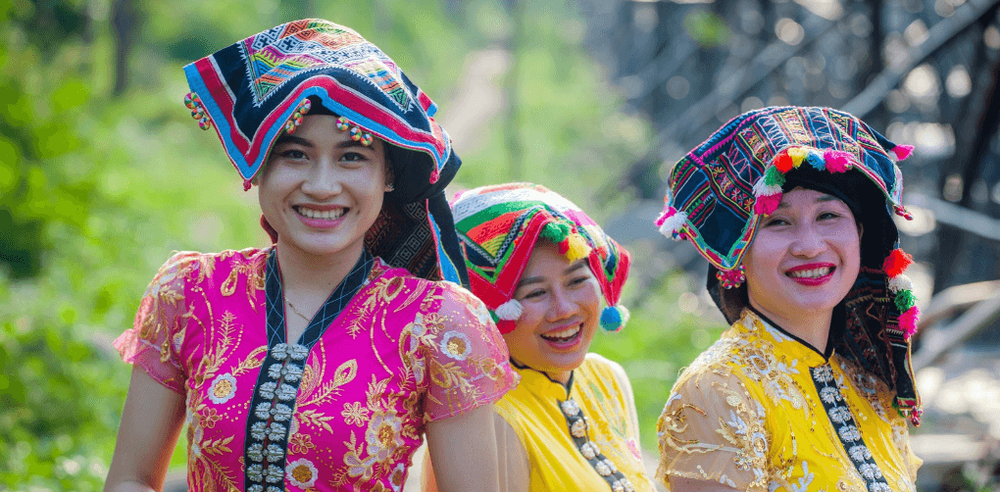
Did you know that Vietnam, with its 54 officially recognized ethnic groups, is home to more than 90 languages?
Vietnam's linguistic landscape is far more diverse than its official ethnic classification might suggest. Some ethnic communities speak more than one distinct language, reflecting centuries of migration, cultural exchange, and historical connections across mainland Southeast Asia.
According to linguist Associate Professor Dr. Tạ Văn Thông of the Vietnam Academy of Social Sciences, the languages spoken in Vietnam belong to five major language families:
Austroasiatic: Vietnamese, Mường, Khmer, Cơ Ho, Ba Na, and others.
Austronesian: Chăm, Gia Rai, Ê Đê, Ra Glai, and Chu Ru.
Tai-Kadai: Tày, Thái, Nùng, Giáy, and others.
Hmong-Mien: Hmông, Dao, and Pà Thẻn.
Sino-Tibetan: Hà Nhì, Lô Lô, Phù Lá, La Hủ, Hoa, and others.
These languages tell fascinating stories about Vietnam's historical relationships with neighboring regions. They also reveal how communities have maintained their distinct identities while continuously interacting and influencing one another.
A Rich Heritage Of Writing Systems
Vietnam's linguistic diversity is also reflected in its remarkable writing traditions.
Some communities have preserved writing systems dating back centuries, including traditional Chăm and Khmer scripts, ancient Thái writing, and various Nôm scripts used by the Tày, Nùng, Dao, and other communities. Other languages developed Latin-based writing systems, particularly during the twentieth century.
These scripts have preserved an extraordinary range of cultural expressions, from religious texts and historical records to folktales, customary laws, poetry, and epic narratives.
Among the best-known examples are the Ê Đê epic Đăm San, the Thái narrative Sóng chụ son sao, and the rich oral and written traditions of communities throughout the Central Highlands and northern Vietnam.
Our Collection: Ethnology & Ethnolinguistics
To encourage further exploration of this linguistic and cultural heritage, Digitizing Việt Nam invites readers to discover our collection, Ethnology & Ethnolinguistics.
The collection brings together scholarly publications on the languages, writing systems, folklore, and cultural traditions of Vietnam's ethnic communities. Its materials include studies of Hmông grammar, Mường dialects, Cơ Ho phonetics, and the Kháng language, alongside collections of traditional narratives and folklore.
These resources offer valuable opportunities for linguists, anthropologists, historians, educators, students, and interested readers to explore Vietnam's ethnic, linguistic, and cultural diversity through scholarly research.
Why Does Preserving Linguistic Diversity Matter?
Despite decades of linguistic research, many languages in Vietnam remain insufficiently documented. Some languages with relatively few speakers face the risk of gradual disappearance, while others have already fallen out of use.
As Professor Tạ Văn Thông emphasizes, documenting languages is not simply about recording vocabulary or grammatical structures. It also involves understanding how languages function in education, cultural life, community relationships, and the transmission of knowledge across generations.
Every language carries a unique way of understanding the world. Preserving linguistic diversity therefore means preserving the many voices, histories, and cultural memories that make up Vietnam.
Through open access to scholarly resources, Digitizing Việt Nam hopes to support further research, encourage public engagement, and contribute to the appreciation and preservation of Vietnam's extraordinary linguistic heritage.
Explore the Ethnology & Ethnolinguistics collection:
https://www.digitizingvietnam.com/en/our-collections/dan-toc-viet-nam-ngon-ngu-van-hoa