One Nôm Character, Different Readings: Revisiting the 1866 Edition of the Tale of Kieu
“Giọt liễu” or “đọt liễu”?
“Gối yên” or “cởi yên”?
A difference of just one reading can change the imagery, meaning, and even the poetic effect of a line in The Tale of Kiều.
Today, most of us encounter Nguyễn Du’s masterpiece through the modern Vietnamese Quốc Ngữ script. Yet The Tale of Kiều was originally transmitted in chữ Nôm, and rendering an old Nôm text into Quốc Ngữ is not always as straightforward as assigning a single pronunciation to each character.
This is the question explored by researcher Đinh Văn Tuấn in his article “Đọc hiểu lại một số chữ Nôm trong bản Kiều cổ 1866” (Reinterpreting Several Nôm Characters in the 1866 Edition of The Tale of Kiều). The study examines Kim Vân Kiều tân truyện, printed by Liễu Văn Đường in 1866 and used by the author as the earliest surviving printed edition of The Tale of Kiều.
According to Đinh Văn Tuấn, several Nôm characters in this edition have previously been romanized in ways that are inconsistent, forced, or not entirely convincing. Part of the difficulty comes from the complex history of the Vietnamese language itself: pronunciation changes over time, individual characters may reflect regional speech or different writing conventions, and old woodblock editions may also contain variations introduced through copying, editing, or printing.
This means that reading a Nôm character in The Tale of Kiều requires more than simply looking at its written form.
The article considers each case through historical phonology, literary context, rhyme, poetic structure, and the sound of the verse when read aloud. It also compares different Nôm editions of Kiều, Quốc Ngữ transcriptions from the late nineteenth century onward, and historical Vietnamese dictionaries. The aim is to identify readings that better fit Nguyễn Du’s language, poetic rhythm, and intended meaning.
One particularly interesting example appears in the line:
“Rụng rời 湥 liễu, tan tành cội mai”
The character 湥 has often been read as “giọt”, resulting in the phrase giọt liễu. Đinh Văn Tuấn, however, proposes reading it as “đọt liễu.”
It may seem like a very small change, yet it creates a noticeably different image.
Đọt refers to a young shoot or newly sprouting tip of a plant. In this reading, “đọt liễu” can evoke the young sisters Thúy Kiều and Thúy Vân, while “cội mai” suggests their older mother, Vương bà. The line then forms a clear poetic parallel: young shoot – old root, willow – apricot blossom. The alternative reading not only makes the meaning more transparent, but also brings the structure and imagery of the verse into sharper focus.
Another example appears in:
“襘 yên đã thấy xuân đường đến nơi”
The character 襘 has often been transcribed as “gối”, producing the phrase gối yên. The author questions this interpretation, noting that the idea of a “pillow” on a horse saddle does not fit the scene particularly well.
Instead, he proposes “cởi yên” — to remove the saddle. He supports this reading by pointing to other instances in older Kiều texts where the same character is used to represent cởi, as in cởi tấm lòng, cởi xiêm, and cởi giáp. With this interpretation, the scene becomes more immediate and natural: the father has arrived, dismounted, and removed the saddle.
In cases like these, a single character changes more than the sound of a line. It can change the image we see and the way we imagine the scene itself.
That is also what makes the study of an old text like The Tale of Kiều so fascinating.
Reading chữ Nôm is not simply a matter of “decoding” individual characters. Each reading emerges from a process of tracing the history of the language, comparing different texts, considering context, and listening closely to the rhythm of the poetry.
And there is not always one definitive answer.
Nguyễn Du’s original manuscript no longer survives, and the article itself acknowledges that in some cases, we may never know with certainty which pronunciation he intended. These uncertainties remind us that a literary classic does not necessarily become a completely “closed” text once it has been written. Through manuscripts, woodblock editions, transcriptions, and generations of scholarship, our understanding of The Tale of Kiều continues to develop.
The 1866 edition of The Tale of Kiều has now been digitized by Digitizing Việt Nam, allowing readers to explore for themselves the Nôm pages that continue to inspire research and debate more than a century later.
👉 Explore the 1866 edition on Digitizing Việt Nam
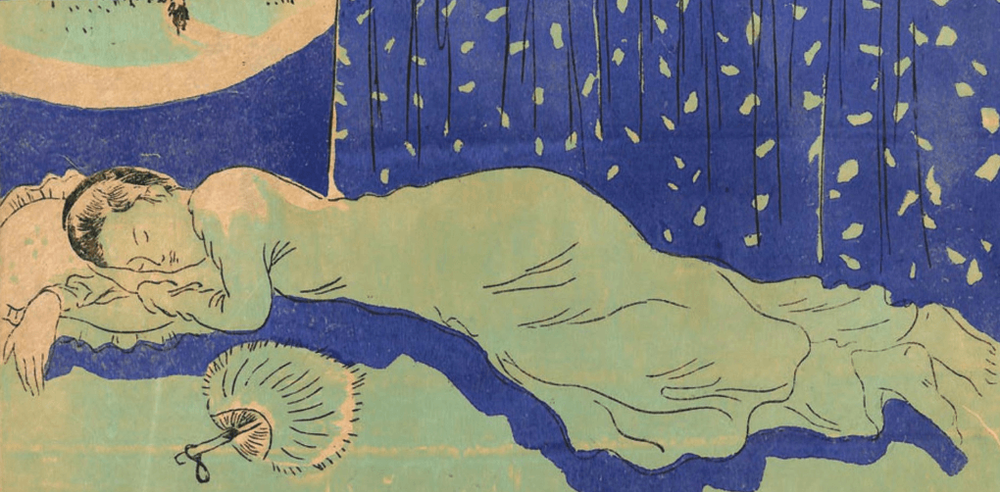
Painting by Nguyen Tuong Lan.